





What Makes a Stamped Slab Come Out Right
Six things that decide how a stamped slab looks in five years, and most of them happen in one afternoon.
Twenty MPa Because the Surface Is the Finish
On a stamped slab the top surface is the product. New Zealand guidance for domestic concrete places driveways at 20 MPa or stronger, and we hold that as the floor on patterned work because the impressed surface is what everybody sees and it has to hold its detail.
One Stamping Window and No Second Pass
Stamping happens in one window while the concrete is still plastic. Too early and the mats sink and the edges slump. Too late and the pattern will not take. Nobody gets a second attempt. We set the crew to the area, so nothing gets poured that the team on site cannot stamp in time.
Joints Cut Into the Pattern Lines
A patterned slab still needs control joints at 3 metre centres cut to a quarter of the slab depth. We plan where those land before the pour and cut them into pattern lines wherever the layout allows, so the joint reads as part of the design instead of a saw cut through it.
Release Agent Washed Off Before Sealing
Release agent stops the mats sticking and it also carries the secondary colour. It has to be washed back evenly before sealing, because sealer over uneven release locks in a patchy finish permanently. This is the step where rushed stamped jobs give themselves away.
Colour Variation Comes With Patterned Work
Colour on patterned work varies across a pour and between loads. That is a property of pigment in concrete, and a stamped surface shows it more than a flat one because the texture catches light differently. We tell you what to expect before the concrete is ordered.
We Say When Stamped Is the Wrong Finish
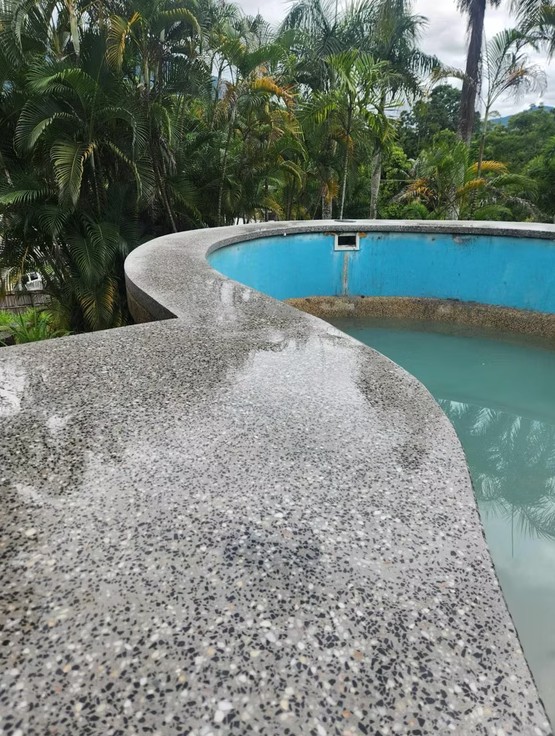
Stamped concrete has more surface area than a flat slab, so it holds dirt and moss in shaded spots and it wants resealing to keep looking new. Where an area sits in permanent shade or the budget will not carry the resealing, we will say that a broom or exposed aggregate finish serves you better.