

What We Do Differently on an Exposed Aggregate Pour
A washed stone finish goes wrong in ways plain concrete does not. These six are where those jobs get won.
20 MPa Because the Top Surface Comes Off
Plain concrete for driveways and paths is often specified at a 17.5 MPa design strength. Exposed aggregate is recommended at 20 MPa, because washing the paste off the top leaves less holding the stone in, and a stronger mix loses fewer stones out of the surface.
Retarder Timed to the Weather on the Day
The retarder we spray stops the paste setting on top while the slab underneath goes hard. How long it stays on depends on the temperature, the wind and the mix, so somebody stays on site and watches the surface until it is ready to wash.
Colour Varies Between Loads and That Is Normal
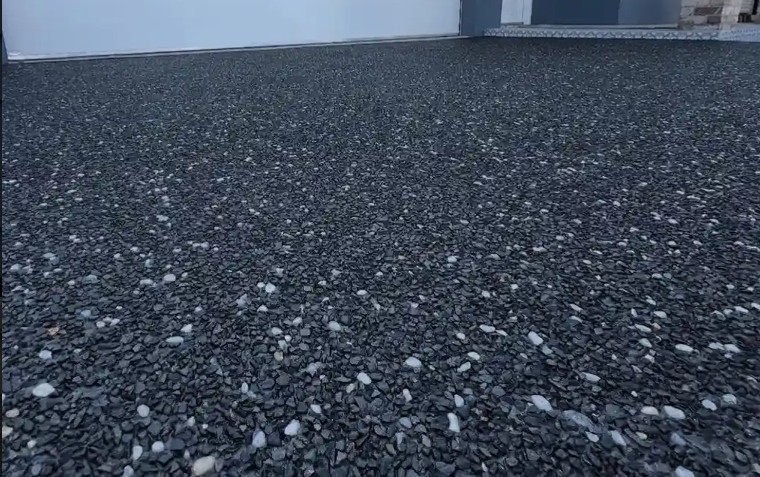
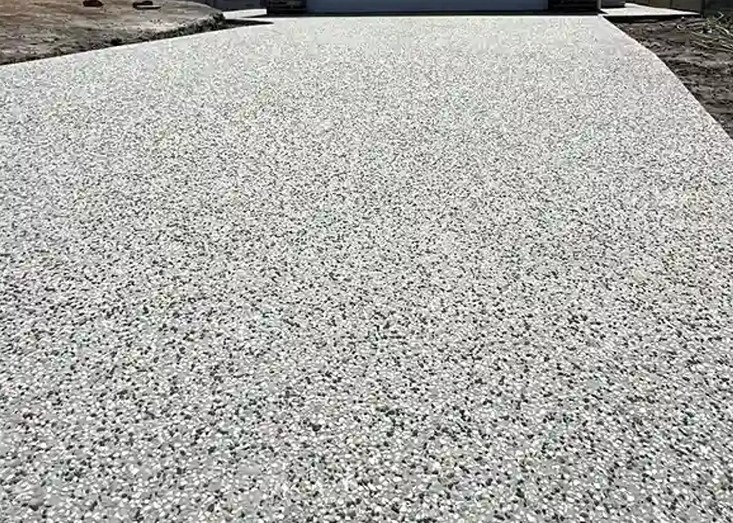
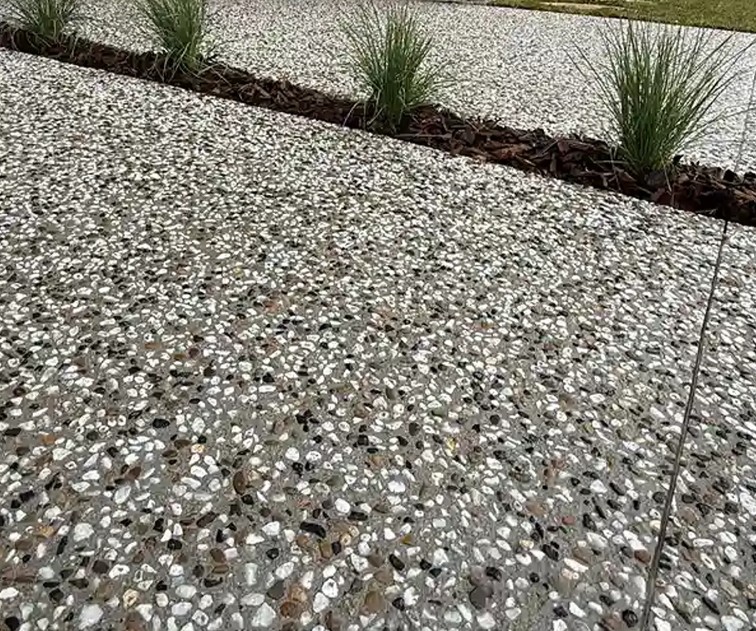
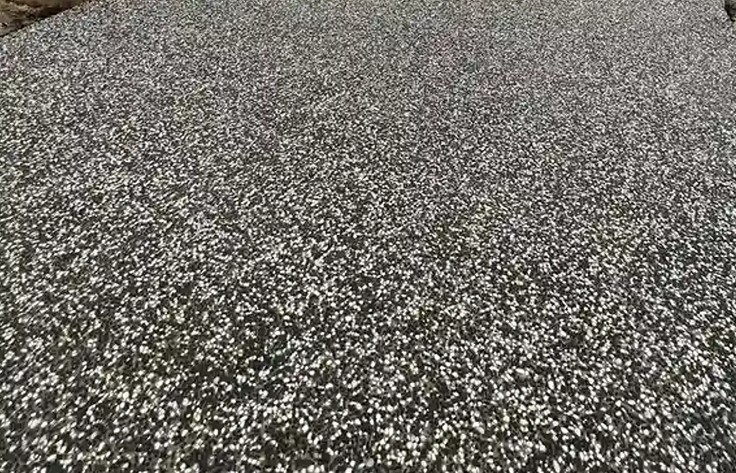
Stone is quarried, so some colour variation across a pour is expected on any washed finish. We order the whole area off one batch where the volume allows it, and we tell you what to expect before the concrete is booked.
Joints Cut at 3 Metre Centres Through the Stone
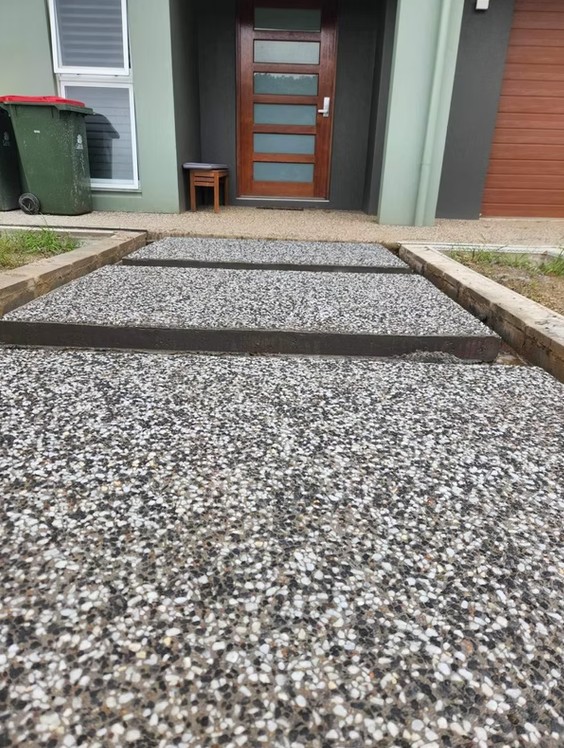
Control joints go in at 3 metre centres, cut to a quarter of the slab depth, inside 24 hours in warm weather and 48 in cold. Cutting through a washed surface is slower and dustier than cutting plain concrete, and a slab with no joints picks its own crack line.
Iron Pyrites and Rust Spotting in Stone
Some aggregates carry iron pyrites, which can stain the surface as they weather. That is a property of the stone and not a fault in the pour, and it is one reason we go through the ranges with you before the concrete is ordered.
We Say When Exposed Aggregate Is the Wrong Finish
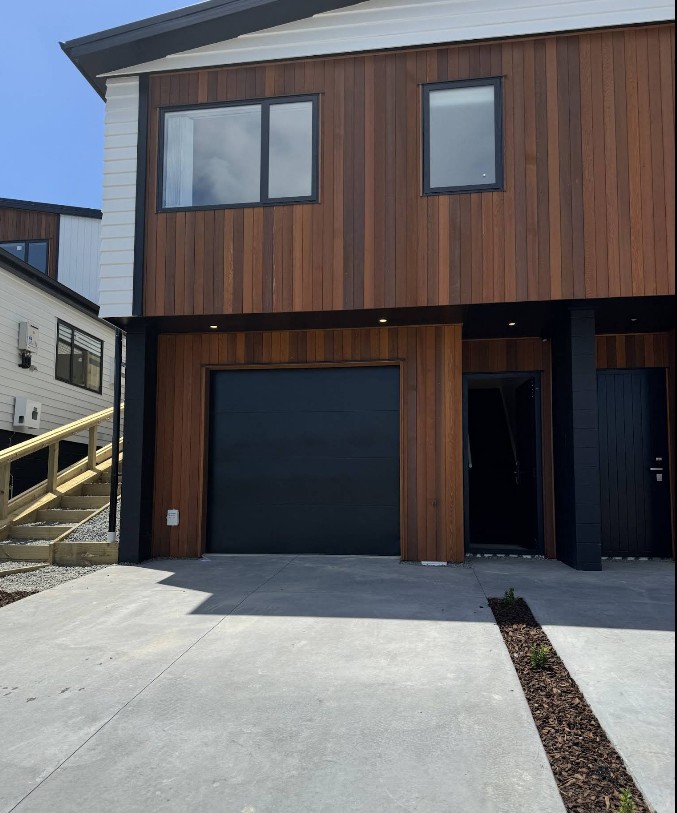
Stone is harder to sweep and harder to clean than a broom finish, and on a shaded path it holds moss. Where a broom finish or a coloured slab would serve the area better, we say so before you have paid for stone.