
What We Do Before We Fill Anything
Six things we do on a repair that decide whether it is still holding in five years.
We Price the Cause, Not the Crack
We quote the cause and not the symptom. Anyone can fill a crack, and a filled crack over moving ground reopens within a season. Working out whether the movement has stopped is the part of a repair that decides everything else, so it happens before a price gets written.
Stable Cracks and Moving Cracks Get Different Work
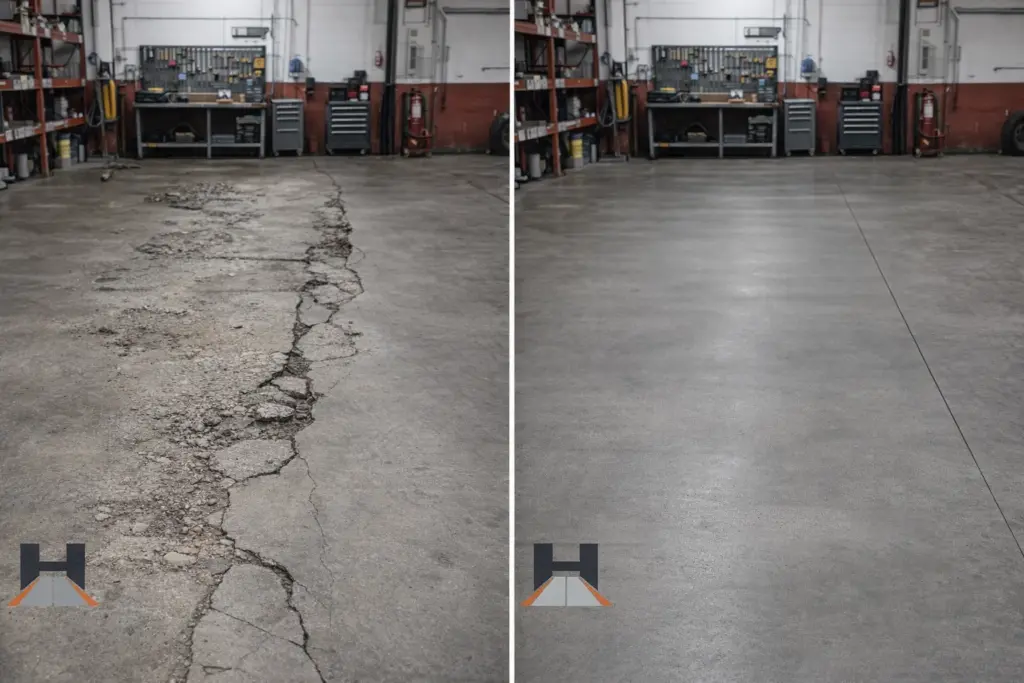
A crack that has finished moving takes a rigid repair that bonds both faces back together. A crack that is still working takes a flexible sealant that can accommodate it. Using the wrong one is why so many previous repairs fail, and telling them apart is a site call, not a photo call.
Joint Layout Is Usually the Real Fault
Most cracked slabs we see were poured without enough control joints, or with joints cut too shallow or too late. Concrete cracks where you put the joint or where it chooses. When we repour we cut joints at 3 metre centres to a quarter of the slab depth, within 24 hours in warm weather and 48 in cold.
Levelling Where the Slab Itself Is Sound
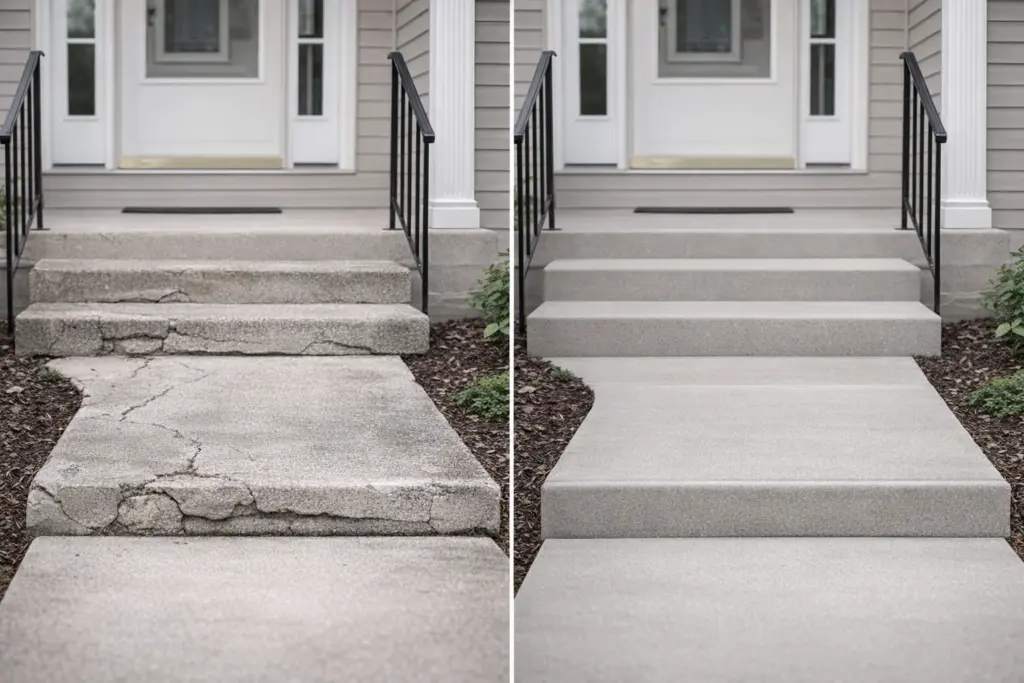
Where the slab has dropped as one piece and the concrete is still sound, lifting it back is faster, cheaper and less disruptive than replacement. We check the panel for breaks first, because a slab that has cracked on the way down cannot be lifted back as a unit.
Rebuilt Crossings Still Need Council Approval
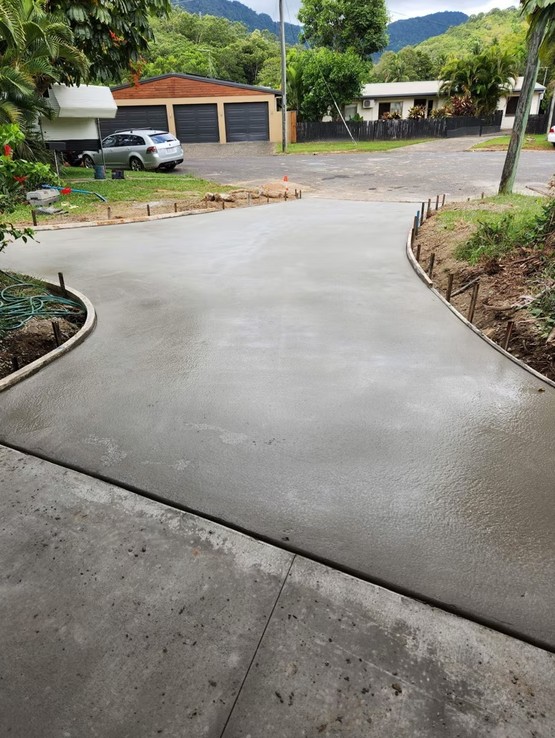
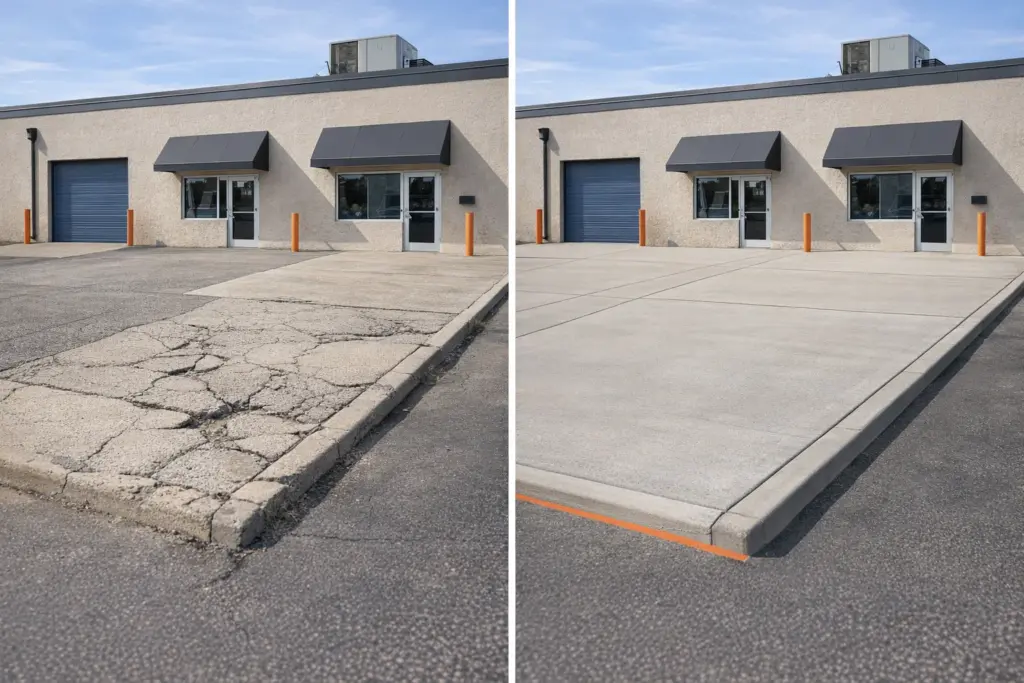
Rebuilding a vehicle crossing is not exempt from approval. Hamilton City Council requires every crossing to be approved before construction and inspected while it is open, and that covers a like for like rebuild of one already there. We allow for it up front.
We Say When a Repair Is Money Spent Twice
Some slabs are past economic repair and saying so costs us the small job in front of us. It is still the right answer. Where patching will buy two winters and a replacement will last twenty, we put both numbers in front of you and let you decide.