
Why Rototuna Owners Pick Us for Concrete Work
Six things that decide whether a Rototuna driveway is still flat in fifteen years.
Drainage Planned Before the Excavation
Rototuna sections are flat, and flat ground gives water nowhere obvious to go. We work out the fall and the discharge point at the site visit, before a spade goes in, because a slab poured level is a slab that ponds.
Soakage Tested Before We Rely On It
Council expects soakage to be used where a tested infiltration rate comes back above 150 mm an hour, and the device has to sit above the winter water table. We test rather than assume, and if the ground fails we say so and price a different disposal.
Hard Surface Kept Inside the Zone Limit
In the General Residential Zone impermeable surface is capped at 70 per cent of the net site area. On a Rototuna section that already has a house, a garage and a driveway, we work out what is left before we design the patio.
665 Mesh Lifted Clear of the Base
Mesh lying flat on the basecourse does nothing for the slab. Ours goes on chairs and finishes 30 to 40 mm below the surface, which is the position that holds a crack together once one appears.
Control Joints at Three Metre Centres
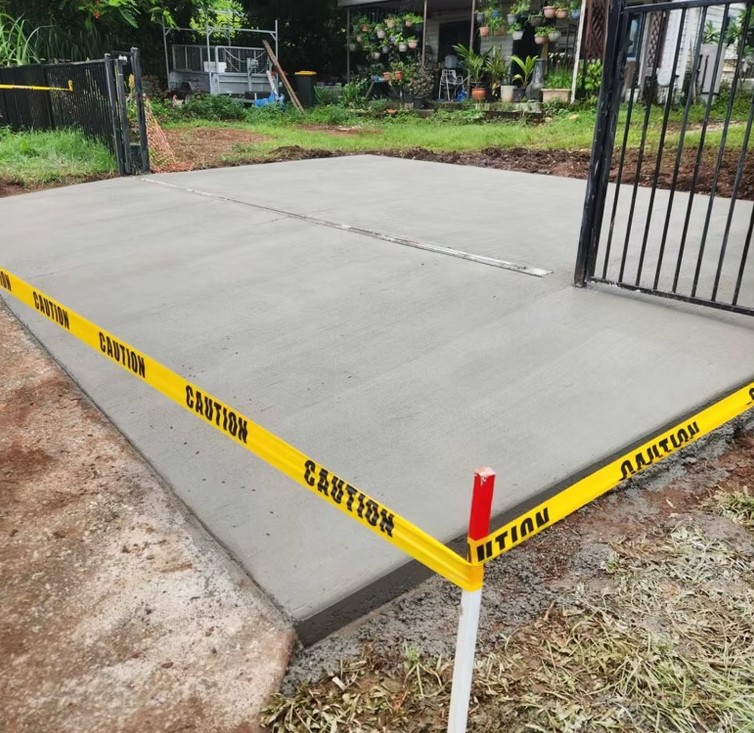
Joints at 3 metre centres, cut a quarter of the way through the slab, inside 24 hours in warm weather. Curing concrete shrinks, and it will crack somewhere. The joint decides where.
One Crew on a Rototuna Section
The people who break out your old driveway are the people who screed the new one and come back to cut the joints. Nothing on a Rototuna job gets handed to a second crew halfway through.