


What Farmers Get From Us
Six things that decide whether a farm surface is still doing its job in ten years.
We Build Dairy Floors to NZCP1
The Ministry for Primary Industries sets what a farm dairy floor has to be: concrete or a similar impervious material, uniformly graded, cleanable after every milking and draining to the effluent system. We build to that document, not to what the last contractor did.
Falls Set From the Effluent System Back
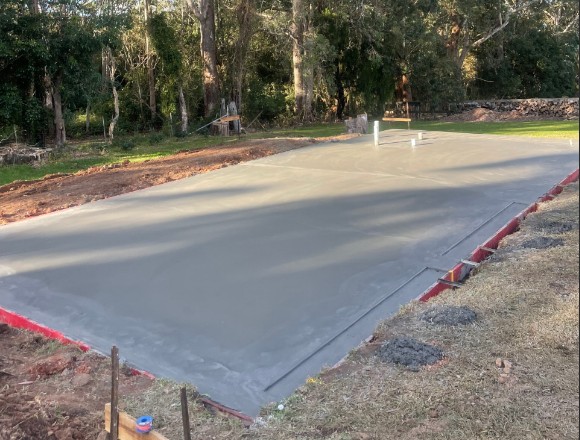
We set out a yard backwards, from the drainage point up. The recommended minimum fall for yards is 1 in 50, and getting there is a levels job done before the boxing goes in, not a screeding job done on the day.
Poured in Sections Around Milking
Cows still need milking while we are there. We pour in sections so the herd keeps moving, and we agree which part of the yard is out of action on which day before the first truck is booked.
Joints Sealed Where Effluent Crosses Them
An open sawn joint on a surface carrying effluent lets liquid straight under the slab. We seal joints where liquid crosses them, and we tell you which ones those are so the maintenance is not a mystery in five years.
Cover Over the Steel for an Aggressive Surface
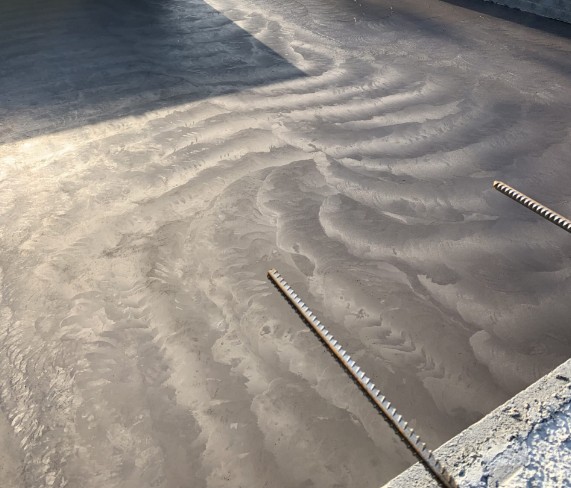
Steel sitting too close to the surface corrodes fast where effluent and silage liquor are present. Our mesh and bar go in on chairs with cover matched to the exposure, which is the cheapest insurance on a farm slab.
Bunker Walls Built to an Engineer Detail
A bunker wall holds back tonnes of silage and gets hit by a loader bucket. We do not guess those. Wall thickness, steel and footing come off an engineer detail worked to your stack height.