


What Decides How Coloured Concrete Ages
Six things that decide whether a coloured slab still looks deliberate in ten years.
Colour Runs Through the Slab
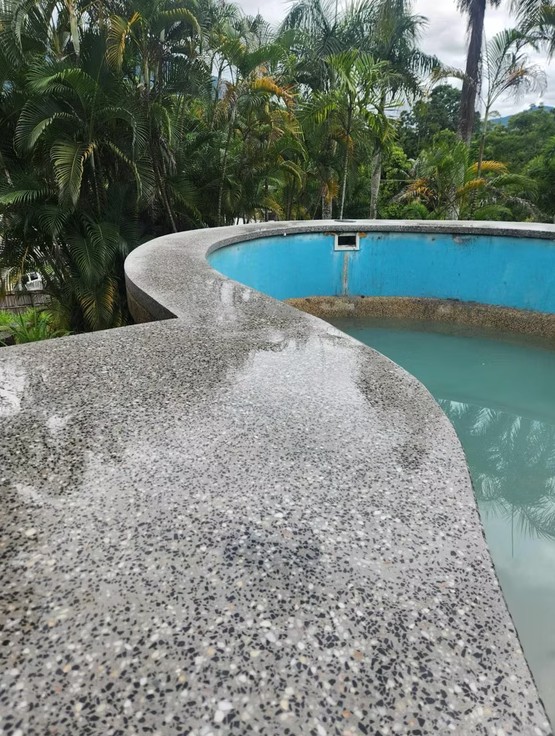
Oxide carried through the mix colours the whole slab, full depth. Surface stains and paints wear back to grey at the wheel tracks within a few years. Pigment through the mix wears to the same colour it started as, which is the entire argument for doing it this way.
One Batch Where the Volume Allows It
Shade varies between batches of concrete. We order the whole area off one batch wherever the volume allows and pour it in one continuous operation, because the visible difference between two loads is far larger than the difference within one.
Efflorescence Shows More on Colour
Efflorescence is the white bloom that salts leave when moisture carries them to the surface. It happens on all concrete and it is simply more visible against colour. A proper damp cure produces a denser, less permeable surface, which is the main thing that reduces it.
The Cure Changes the Final Shade
How a coloured slab is cured changes the colour it ends up. Patchy drying leaves patchy shade, and plastic laid unevenly over a fresh coloured slab prints its own pattern into the finish. We cure evenly across the whole area for the full seven days.
Joints Cut at 3 Metre Centres
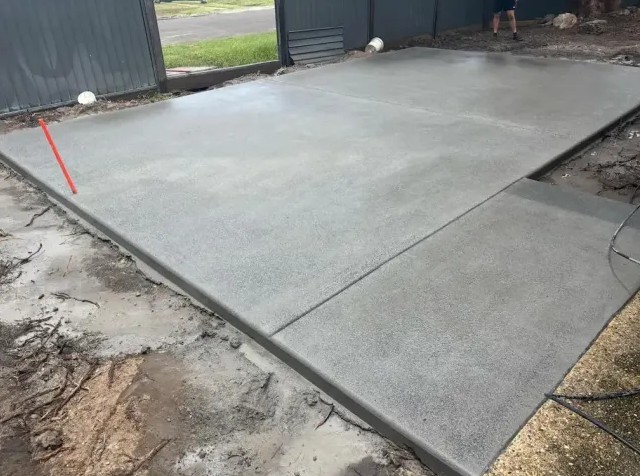
Coloured concrete cracks the same way grey concrete does, and a crack is more obvious across a deliberate colour. Control joints go in at 3 metre centres, cut to a quarter of the slab depth, within 24 hours in warm weather and 48 in cold.
We Say When Colour Will Not Sit Right
Some colours fight what is already on the section, and some areas get too little light to carry a dark oxide. Where a colour is going to look wrong or disappear, we say so at the sample stage rather than after three cubic metres of it has been delivered.