


Stamped Concrete Hamilton

At Hamilton Concrete Contractors we lay stamped concrete across Hamilton and the Waikato, on driveways, patios, pool surrounds, paths, courtyards and steps. Stamped work takes its pattern from mats pressed into the slab while the concrete is still plastic. The texture and the joint lines are part of the concrete, not units laid on top of it. That means nothing for weeds to come up between and nothing that can lift or rock underfoot. Colour goes through the mix or onto the surface as a hardener.

The pattern goes in during one window on pour day and there is no second pass at it. That is why stamped work rewards a crew that has laid it before more than any other finish does. We pour it at 20 MPa over 100 mm of compacted GAP20, with 665 mesh lifted on chairs. We measure the area, go through the pattern and colour options with you, and put the price in writing.

Quick. Reliable. Local.
Google Reviews five star rating
Miss QQ
Verified Google Review

“I highly recommend Hamilton Concrete Contractors. They are a reliable company that does top-notch work.

Get Your Free Stamped Concrete Quote

Tell us the area and roughly what look you are after, whether that is a stone, slate, cobble or timber pattern. If you have seen a job you liked anywhere in Hamilton, describe it and we will usually know the pattern.

★★★★★
5.0 on Google | 10+ years in the trade
Stamped and Patterned

Stamped Concrete Work We Lay

Six kinds of stamped job cover nearly all of what we quote. Driveways bring in the most enquiries and pool surrounds carry the most detail per square metre, so those two lead. It sits alongside every other concrete finish we lay in Hamilton, poured by the same crew.

Stamped concrete driveway pattern in Hamilton

Stamped Concrete Driveways

Driveways are where most of the stamped concrete we lay ends up, usually because a patterned driveway reads as paving from the street while behaving like a slab underneath.

We pour a stamped driveway at 100 mm as standard and 150 mm where a boat, a horse float or a truck lives on it. The pattern has no effect on how much load the slab carries, so tell us what parks on it and we will build the slab to that, then stamp it.

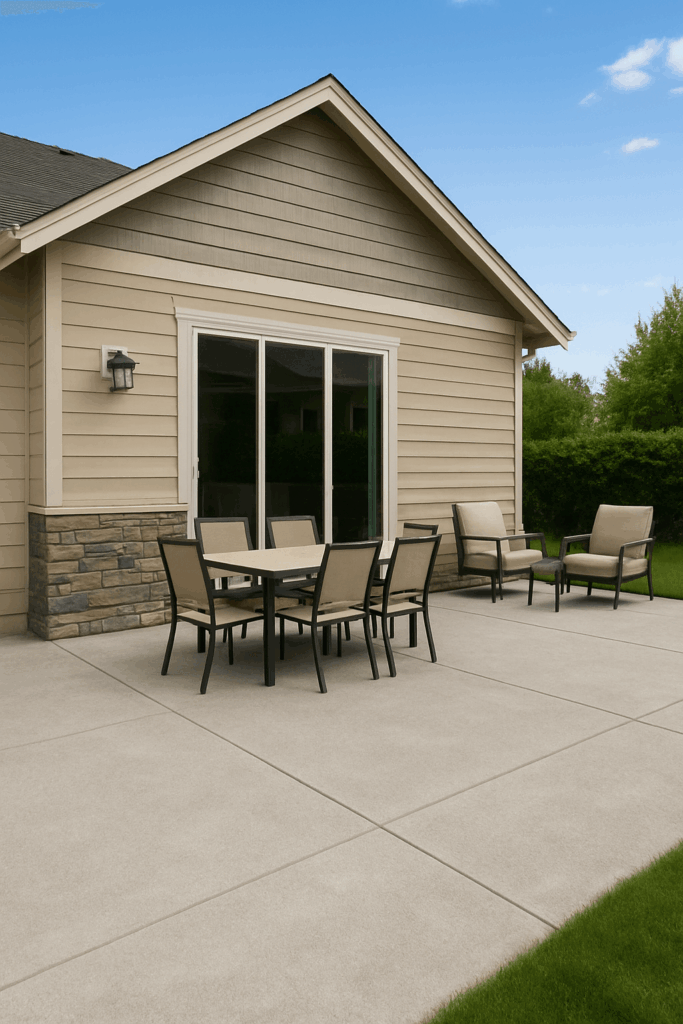
Stamped concrete patio in Hamilton

Stamped Patios and Courtyards

Patios and courtyards are the areas we stamp most often for looks alone, and a pattern does more work here than anywhere else because the surface is seen from a metre away.

Cladding clearance sets the level before the pattern is even chosen. Weatherboard, fibre cement and plaster want 150 mm between the bottom of the cladding and a paved surface, so we settle the finished height with you before the forms go in.

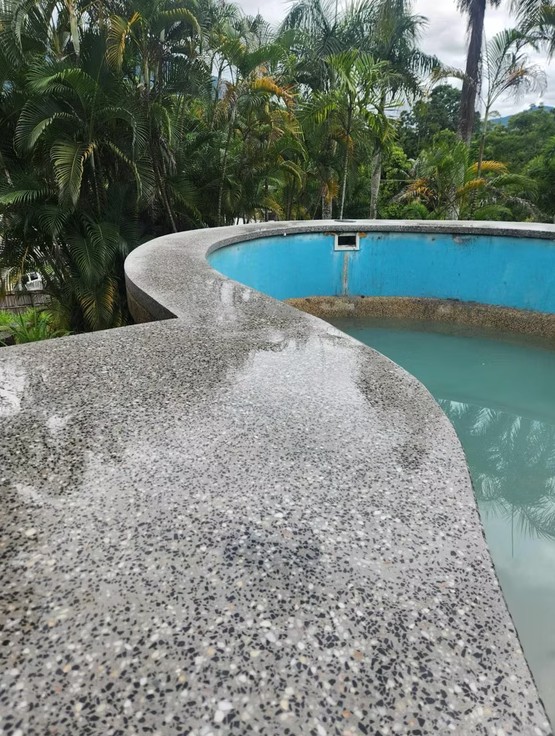
Concrete pool surround in Hamilton

Stamped Pool Surrounds

Around pools we stamp for texture as much as for pattern, since a mat leaves a surface with grip in it and a smooth trowelled slab beside water does not.

Pattern choice matters more than colour here because it is what your feet are actually on. We fall the surround away from the water, set joints around the coping, and keep the pattern lines running with the shape of the pool.

Stamped concrete path and steps in Hamilton

Stamped Paths and Steps

Paths and steps are the smallest stamped work we do and the fiddliest, because a narrow run gives a pattern nowhere to hide a repeat.

We set the pattern out from the most visible end so the part people look at is a full pattern. On steps the nosing is formed and stamped separately, and the path to a front door has to hold grip when wet because it is an access route.

Pattern and colour samples for stamped concrete

Pattern, Colour and Border Selection

Choosing the pattern and colour is the part of a stamped job we spend the most time on with customers, and it is worth the time because none of it can be changed after pour day.

Patterns run from ashlar slate and random stone through to cobble and timber plank. Colour comes through the mix or as a surface hardener with a contrasting release. A border in a different pattern frames the area and gives the field pattern a clean edge to die into.

Sealed stamped concrete surface in Hamilton

Resealing Existing Stamped Concrete

Resealing is what brings people back to us on stamped concrete, because the sealer carries the colour depth and it is a wearing product.

We wash the surface down, lift any efflorescence and let it dry properly before the sealer goes on, since sealing over trapped moisture clouds the finish. We tell you which product went down and what recoat interval its manufacturer sets, rather than quoting an interval that suits us.

The Stamping Window

How We Pour and Stamp a Patterned Slab

Five stages, and the fourth one lasts about an hour.

01

Pattern, Colour and Sample Selection

We bring pattern mats and colour samples to the site visit, because a colour chip in a showroom and the same colour on your section in daylight are not the same thing. Nothing about this can be revisited after the pour.

02

Written Quote and Pattern Confirmation

The quote names the pattern, the colour method, the border, the slab depth and the base. Once you confirm it, the mats and the colour are ordered against that.

03

Base, Mesh and Formwork Set Out

We dig to depth, compact 100 mm of GAP20 in layers and lift 665 mesh on chairs. Formwork is set to the finished level, which on a patio means holding the cladding clearance.

04

Pour, Colour and the Stamp Window

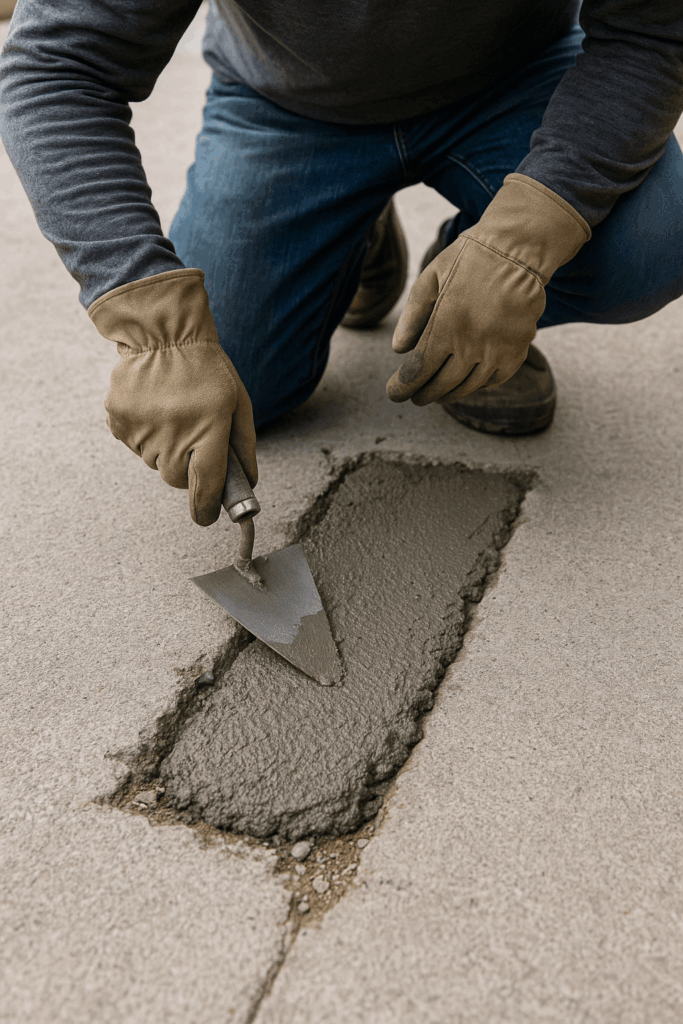
Concrete is placed, screeded and floated, colour goes on, and the mats are pressed in while the slab is still plastic. That window is short and it does not reopen, so the crew size is set by the area rather than by the budget.

05

Release Wash, Joint Cut and Seal

The release agent is washed off once the slab has hardened, control joints are cut at 3 metre centres to a quarter of the slab depth, the slab is damp cured for seven days, and the sealer goes on to a dry surface.

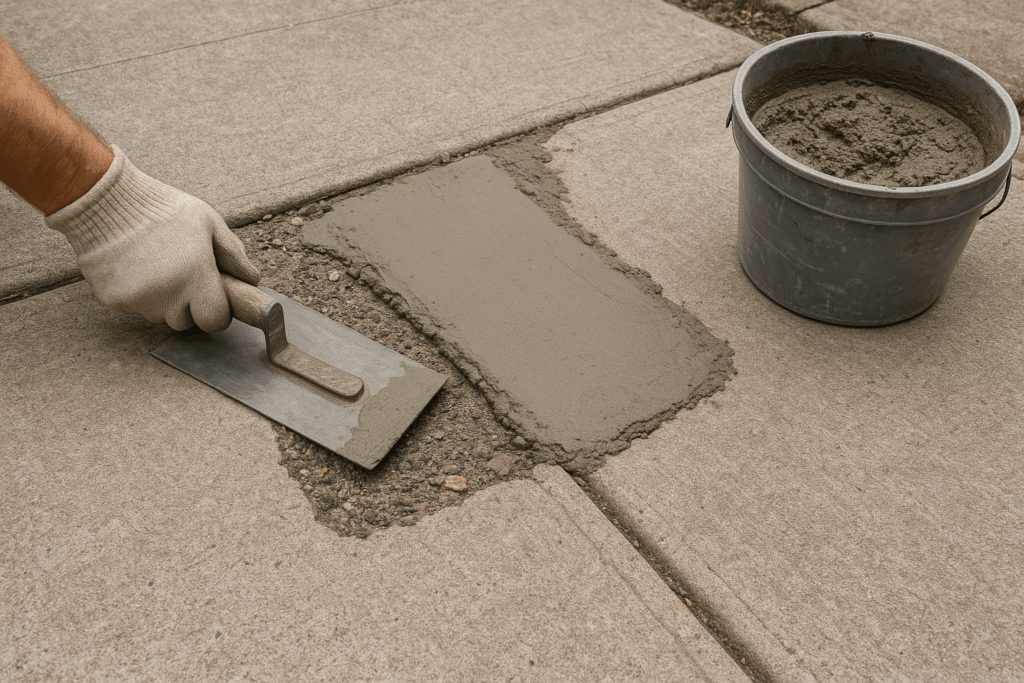
Concrete being stamped while still plastic
5.0

Rated on Google

Stamped Concrete Prices in Hamilton

Stamped concrete in Hamilton runs $150 to $220 per square metre installed, which puts it at the top of the decorative range. The pattern, the number of colours and the amount of border work decide where a job lands in that band.

For comparison against the other finishes on the same slab, a plain or broom finish runs $100 to $150 per square metre and coloured concrete runs $120 to $170. Stamped costs more than either because the pattern adds mats, release, extra labour on the day and a sealer at the end.

Guide figures only, current August 2026, and not a quote. We measure the area on site, confirm the pattern and colour with you, and the price comes back in writing.

Stamped concrete workGuide range (Aug 2026)
Stamped concrete, single colour$150 to $190 / m²
Stamped concrete with border and second colour$175 to $220 / m²
Coloured concrete on the same slab$120 to $170 / m²
Plain or broom finish on the same slab$100 to $150 / m²

What Moves the Price of a Stamped Job

Pattern complexity. A large format ashlar with few repeats lays faster than a small cobble. The mat count and the amount of hand detailing between mats both move with the pattern.

Number of colours. A single integral colour is one process. A base colour with a contrasting release, or a second colour in a border, adds materials and passes.

Border work. A border in a different pattern frames the job and it is slower per metre than the field. Long perimeters and complex shapes both add border metres.

Area and shape. Big open areas give the pattern room to run. Narrow paths, tight courtyards and lots of edges mean more cutting and more hand work.

Crew size on pour day. The stamping window is short and fixed by the concrete, not by us. A large area needs more people on site that day to get the mats down in time.

Slab thickness and steel. 100 mm carries cars and people on foot. Heavier vehicles need 125 or 150 mm and heavier reinforcing, and the pattern does not change that.

Sealing. Stamped concrete is normally sealed, and the sealer is priced with the job at the site visit.

The council crossing. Where the work reaches the kerb, the crossing has to match the existing footpath and Council approval and inspection sit in the programme.

On the Day

What Makes a Stamped Slab Come Out Right

Six things that decide how a stamped slab looks in five years, and most of them happen in one afternoon.

Twenty MPa Because the Surface Is the Finish

On a stamped slab the top surface is the product. New Zealand guidance for domestic concrete places driveways at 20 MPa or stronger, and we hold that as the floor on patterned work because the impressed surface is what everybody sees and it has to hold its detail.

One Stamping Window and No Second Pass

Stamping happens in one window while the concrete is still plastic. Too early and the mats sink and the edges slump. Too late and the pattern will not take. Nobody gets a second attempt. We set the crew to the area, so nothing gets poured that the team on site cannot stamp in time.

Joints Cut Into the Pattern Lines

A patterned slab still needs control joints at 3 metre centres cut to a quarter of the slab depth. We plan where those land before the pour and cut them into pattern lines wherever the layout allows, so the joint reads as part of the design instead of a saw cut through it.

Release Agent Washed Off Before Sealing

Release agent stops the mats sticking and it also carries the secondary colour. It has to be washed back evenly before sealing, because sealer over uneven release locks in a patchy finish permanently. This is the step where rushed stamped jobs give themselves away.

Colour Variation Comes With Patterned Work

Colour on patterned work varies across a pour and between loads. That is a property of pigment in concrete, and a stamped surface shows it more than a flat one because the texture catches light differently. We tell you what to expect before the concrete is ordered.

We Say When Stamped Is the Wrong Finish

Stamped concrete has more surface area than a flat slab, so it holds dirt and moss in shaded spots and it wants resealing to keep looking new. Where an area sits in permanent shade or the budget will not carry the resealing, we will say that a broom or exposed aggregate finish serves you better.
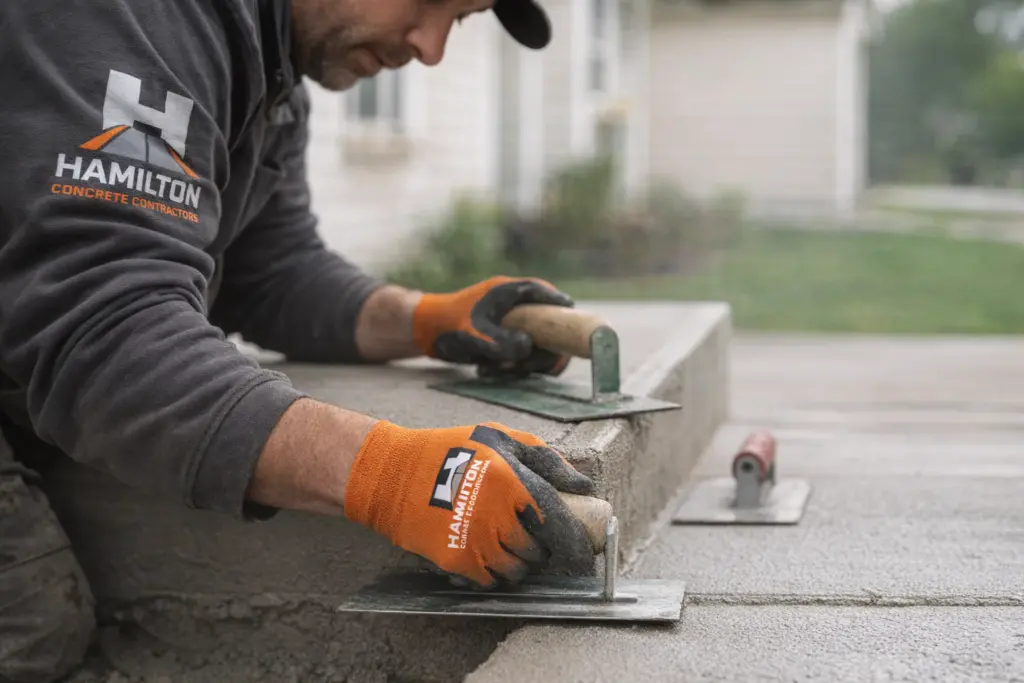
Hamilton section prepared for a stamped concrete pour
Joints and Weather

Stamped Concrete, Control Joints and Hamilton Winters

Two things decide whether a stamped slab still looks like the day it was poured, and neither of them is the pattern.

The first is joints. A patterned surface does not change the fact that concrete shrinks and has to crack somewhere. New Zealand domestic guidance puts control joints at 3 metre centres, cut to a quarter of the slab depth, within 24 hours in warm weather and 48 hours in cold. On plain concrete an uncut slab simply cracks. On a stamped slab it cracks straight through a pattern you have paid a premium for, which is why the joint layout gets planned against the pattern layout before anything is poured.

The second is the weather on pour day, and it is the reason stamped work is seasonal here in a way plain concrete is not. Concrete must not be placed below 5 degrees on a falling thermometer or 2 degrees on a rising one, and below 10 degrees the hydration reaction slows, which delays setting and strength gain. On a plain pour a slow set costs you a late finish. On a stamped pour it moves the stamping window, and a window that arrives at dusk in a Hamilton winter is a genuine problem. Hamilton gets regular winter ground frosts, so we schedule patterned work around the forecast.

Underneath, the ground is the usual Hamilton story. The ground here is the Hinuera Formation, which Council geotechnical work characterises as interbedded coarse alluvium, pumice gravels, peat and silts, highly variable across a site and down through it. A stamped slab that settles unevenly is far more expensive to put right than a plain one, because a patched patterned surface never matches. Hamilton had an estimated resident population of 192,100 at 30 June 2025, and the sections being built on now are largely cut and filled platforms where that variability is at its sharpest.

Reviews

Google Reviews From Hamilton Concrete Customers

Google reviews from our customers, pulled live from the profile, across every finish we lay.

EXCELLENT
Google star 1Google star 2Google star 3Google star 4Google star 5
Based on 10 reviews
Posted on Google Google
Amit Sharma profile picture
Amit Sharma
Google star 1Google star 2Google star 3Google star 4Google star 5Trustindex verifies that the original source of the review is Google.
My driveway was cracked all over and needed replacement as it was very old and worn off. I called Hamilton Concrete Contractors for a quote and consultation. Olly came over the next day to have a look and suggested the solution that best suited to my driveway's condition. I really liked the friendly vibes from Olly and he sounded like he genuinly cared. I got 3 more quotes from other companies but they were very transactional in my opinion. I liked Olly's approach and vibe so decidied to go ahead with him. He did an exceptional job for me and I am happy with the service.
Posted on Google Google
kritika arora profile picture
kritika arora
Google star 1Google star 2Google star 3Google star 4Google star 5Trustindex verifies that the original source of the review is Google.
We had an outstanding experience with Hamilton Concrete Contractors. The team was professional, punctual, and highly skilled. They handled our concrete project from start to finish with great precision, ensuring a smooth and durable finish. Their attention to detail and quality workmanship was excellent, and they kept the site clean and safe throughout the process. Communication was clear and consistent, and all our questions were answered promptly. We are extremely happy with the results and highly recommend Hamilton Concrete Contractors for any residential or commercial concrete work in Hamilton.
Posted on Google Google
Seyi Oluokun profile picture
Seyi Oluokun
Google star 1Google star 2Google star 3Google star 4Google star 5Trustindex verifies that the original source of the review is Google.
Tested and trusted. They have proven that they are reliable for any construction project. Highly recommended to all and sundry.
Posted on Google Google
abah boniface profile picture
abah boniface
Google star 1Google star 2Google star 3Google star 4Google star 5Trustindex verifies that the original source of the review is Google.
They are absolutely reliable, they kept to the agreement and they delivered the job smoothly
Posted on Google Google
Damilola Oscar (J Hanameel) profile picture
Damilola Oscar (J Hanameel)
Google star 1Google star 2Google star 3Google star 4Google star 5Trustindex verifies that the original source of the review is Google.
One of the best at this. I am very excited to work with them. You can trust them too, I strongly recommend!
Verified by Trustindex
Trustindex verified badge is the Universal Symbol of Trust. Only the greatest companies can get the verified badge who has a review score above 4.5, based on customer reviews over the past 12 months. Read more
Before You Pick a Pattern

Stamped Concrete FAQs

What people ask before committing to a pattern they cannot change afterwards.

$150 to $220 per square metre installed. Pattern complexity, the number of colours and how much border work is involved decide where a job lands. On the same slab a plain or broom finish runs $100 to $150 and coloured concrete runs $120 to $170, so stamped sits at the top of the decorative range. It costs more because of the mats, the release agent, the extra crew on pour day and the sealer. Guide ranges. The written price follows the site visit.

They solve the problem differently. Stamped concrete is one slab with a pattern pressed into it, so there are no units to lift, rock or grow weeds between, and no sand joints to wash out. Pavers can be lifted individually and relaid, which stamped concrete cannot. Stamped work needs resealing to hold its colour depth. Pavers do not. We will tell you which suits your area rather than which we would rather lay.

100 mm minimum at 20 MPa or stronger, over 100 mm of compacted GAP20 basecourse, with 665 or 668 mesh lifted on chairs to finish 30 to 40 mm below the surface. We go to 150 mm on soft or clay ground and where heavier vehicles park. The pattern has no bearing on the structure at all, so the slab is designed for what sits on it and then stamped.

Concrete cracks, and a pattern does not change that. What changes it is the joint layout. Control joints go in at 3 metre centres cut to a quarter of the slab depth, and on stamped work we plan where they land before the pour so they follow pattern lines rather than cutting across the design. A slab with no joints or with joints cut too shallow will crack where it chooses, and on a patterned surface that is far more obvious.

Sealing is normal on stamped work because the sealer carries much of the colour depth and protects the impressed surface. It is a wearing product and it needs renewing. There is no single national reseal interval, because sealer life depends on the product, the traffic over it and the sun it takes. We name the sealer that goes down and the recoat interval its manufacturer publishes.

The texture from the mat gives more grip than a smooth trowelled surface, and sealers vary in how much they reduce it. Around a pool or on a sloping path that matters. Access routes must have adequate slip resistant walking surfaces under all conditions of normal use under the Building Code, and a front entry path counts as one. Tell us where the area sits and we will match the pattern texture and the sealer to it.

Pigment in concrete varies between loads, between batches and with how much water is in the mix on the day. A stamped surface shows it more than a flat one because the texture catches light differently across the pattern. Some variation is expected and it is what stops a large area looking printed. We go through the range with you before the concrete is ordered so the result is what you were expecting.

No. The pattern is pressed into wet concrete, so there is nothing to stamp on a slab that has already set. Where an existing slab is sound, a stencilled or patterned resurfacing system is the overlay route and it gives a printed pattern rather than an impressed one. Where the slab has cracked past repair it comes out and a new stamped slab goes in. We tell you which applies at the site visit.

Free Stamped Concrete Quotes

Get a Free Stamped Concrete Quote

Tell us the rough size of the area and the finish you are after. We come out, measure it and send the price in writing. Call 07 808 6940.

Request Your Stamped Concrete Quote
