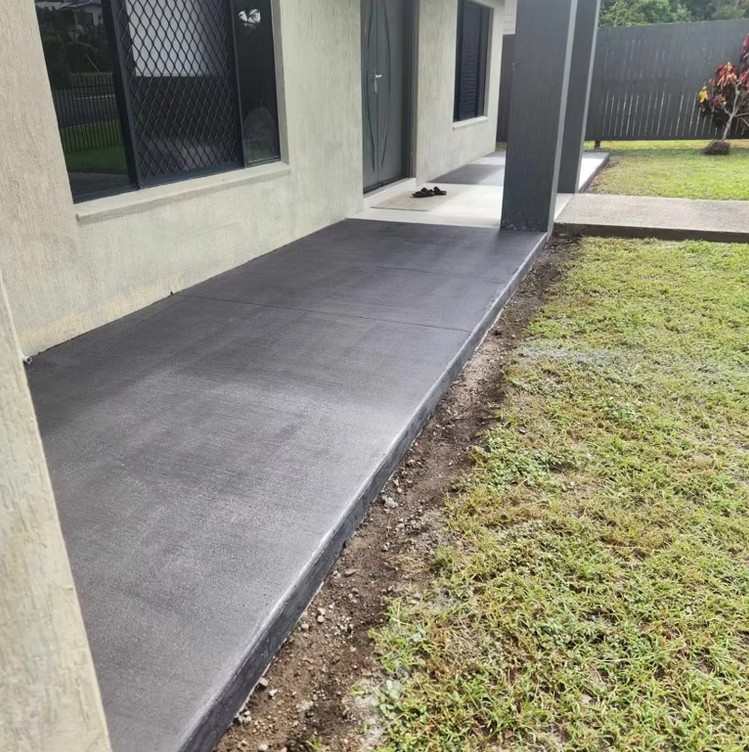

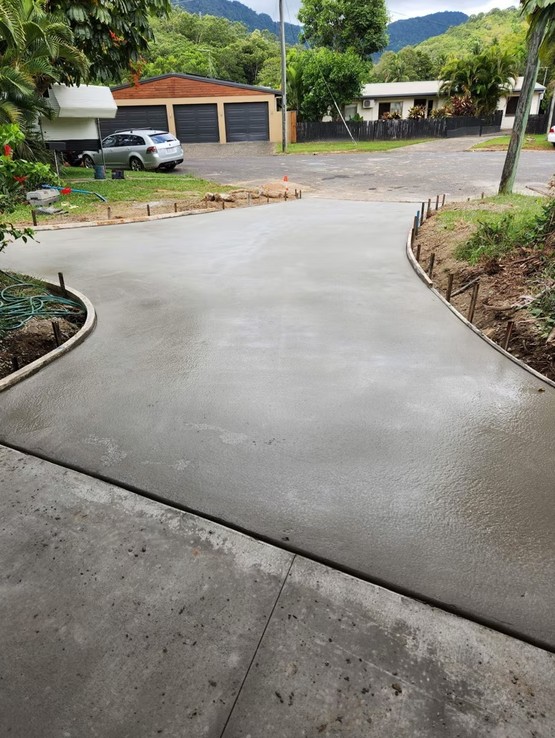
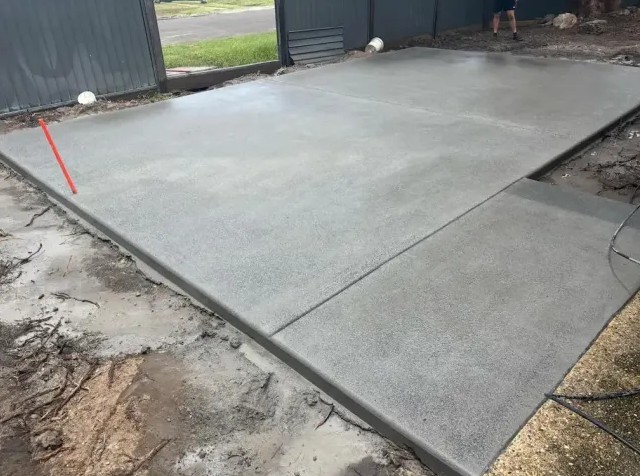
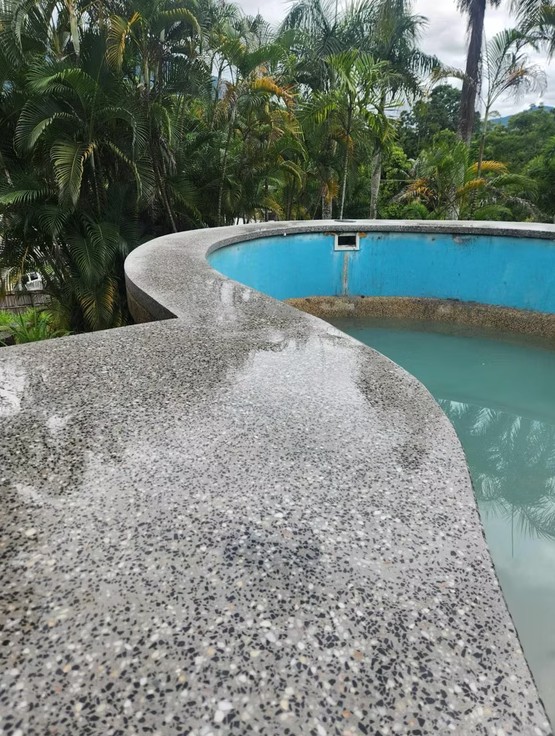
What Decides Whether an Overlay Holds
Six things that decide whether an overlay is still bonded in ten years, and none of them are the product.
We Test the Slab Before Quoting the Topping
We assess the slab before we price the topping. Panels that sit level, cracks that have stopped moving, and sound concrete close to the surface are the three conditions that make resurfacing worth doing. Where they are not met, an overlay is a cosmetic delay on a structural problem.
Existing Joints Carried Through the Overlay
The slab underneath keeps moving at its joints regardless of what goes over the top. Every existing control joint is carried through the new surface in the same position, because an overlay run continuously across a joint will crack along it within a season.
Square Edges Rather Than Feathered Ones
Overlays fail at their edges first. A topping run out thin to nothing has almost no strength at the feather, and it lifts as soon as a wheel or a shovel catches it. We terminate against a saw cut so the edge finishes at full thickness.
Preparation Is Most of the Work
Most of the hours on a resurfacing job go in before any new material arrives. Grinding, etching, degreasing and crack treatment are the work. A topping laid over an unprepared surface bonds to the laitance rather than to the concrete, and takes it with it when it goes.
A Moving Slab Is Not a Resurfacing Job
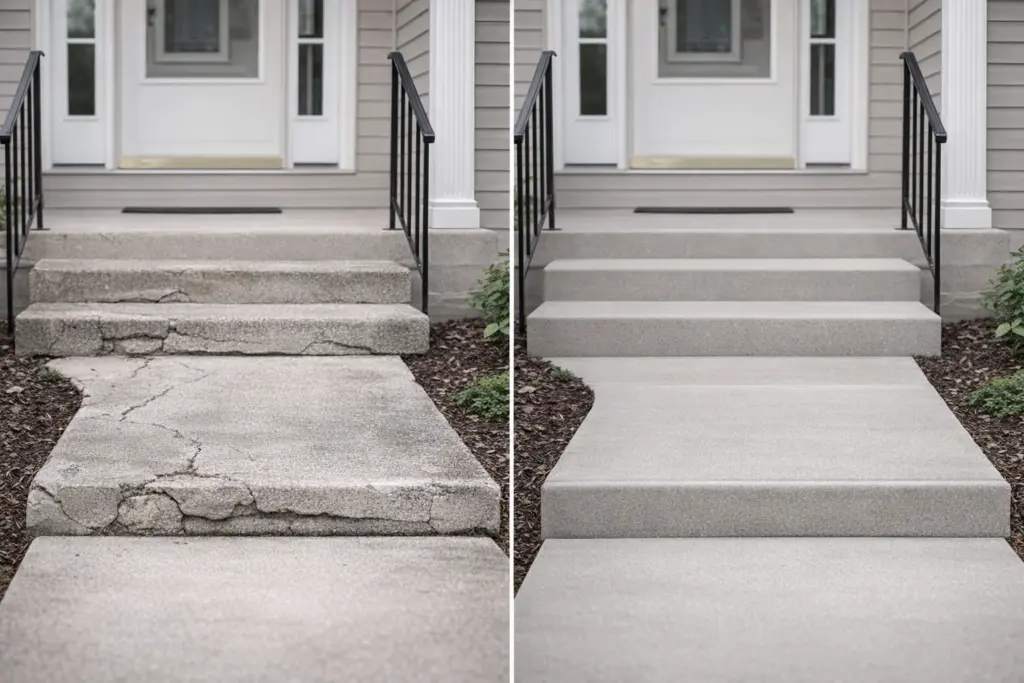
Where a slab has stepped at the joints or dropped at one end, the ground under it has moved. Resurfacing that slab covers the symptom and leaves the cause exactly where it was. We quote a repair or a replacement for those, and explain why.
We Tell You What an Overlay Will Not Hide
An overlay changes the surface. The shape stays as it was. It will not fix a fall that ponds water, it will not raise a slab that has sunk, and it will not straighten a level that was set wrong. We say which of those apply to your area at the site visit.