

Concrete Repair Hamilton

At Hamilton Concrete Contractors we repair concrete across Hamilton and the Waikato, on driveways, paths, patios, garage floors, commercial slabs and steps. We seal cracks, inject and stitch them, grind out trip hazards, level slabs that have dropped, and replace panels that have gone past saving. The first job on any repair is working out why the concrete failed, because a crack from shrinkage and a crack from ground movement look much the same and need completely different work.

We tell you when a repair will hold and when it is money spent twice. A slab that has stepped at the joints has usually moved underneath, and filling the crack leaves the cause sitting in the ground. Most of what we are called to fix was poured without a joint layout that could control it. We measure the area, work out what is under it, and put the price in writing.

Quick. Reliable. Local.
Google Reviews five star rating
Miss QQ
Verified Google Review

“I highly recommend Hamilton Concrete Contractors. They are a reliable company that does top-notch work.

Get Your Free Concrete Repair Quote

Tell us roughly how big the area is and what it is doing. Photos help more here than on any other job, so send one along the crack and one across it if you can.

★★★★★
5.0 on Google | 10+ years in the trade
Repair Work

Concrete Repairs We Take On

Six kinds of repair cover almost everything we get called out to. Cracked driveways bring in the most calls and slab levelling saves the most money against a replacement, so those two lead. The same crew handles it as the new concrete we pour across Hamilton City.

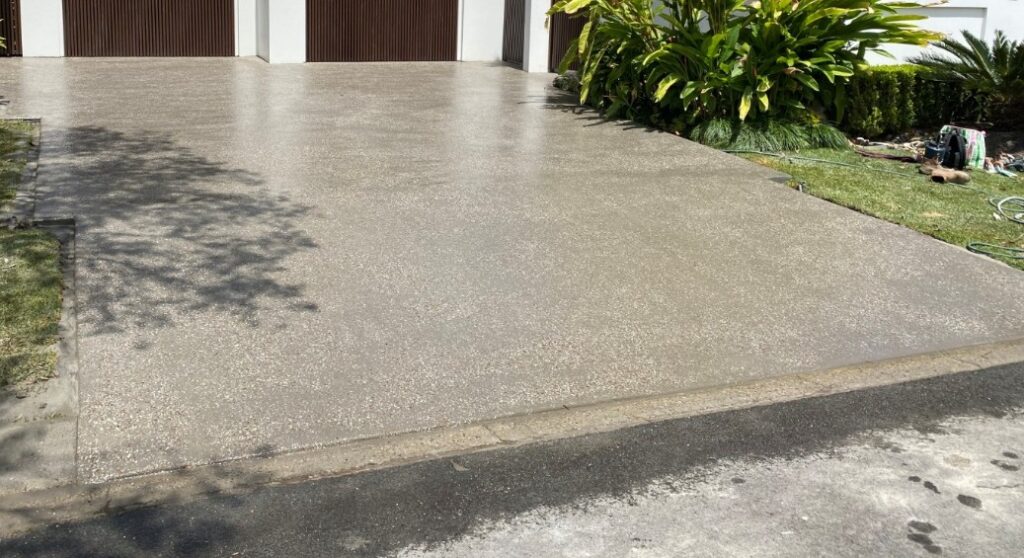
Concrete driveway replacement in Hamilton

Cracked Driveway and Path Repair

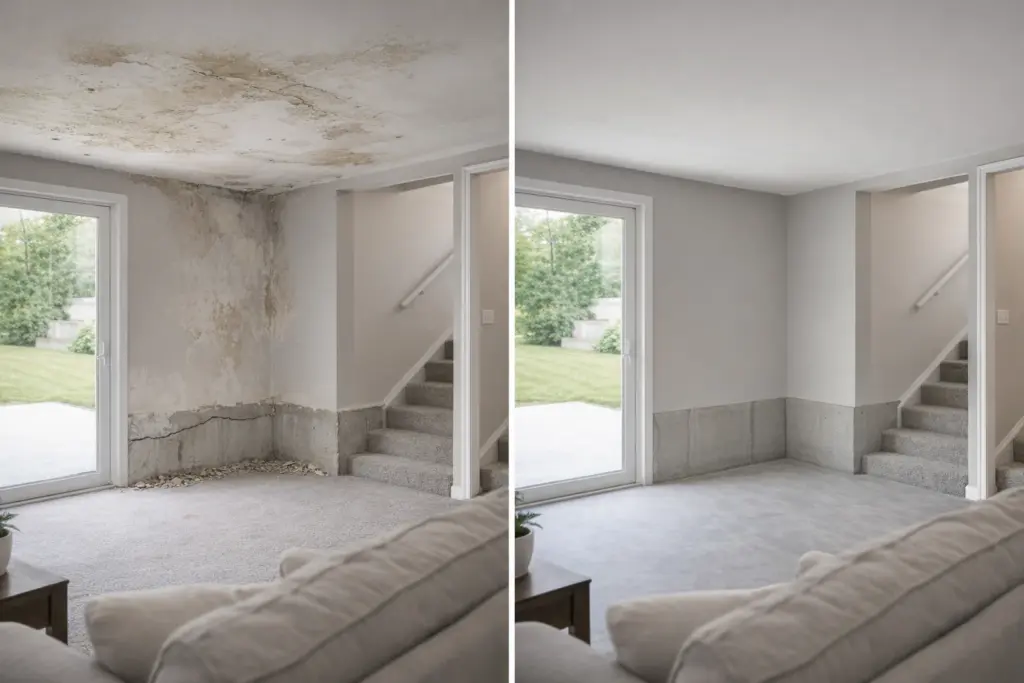
A cracked driveway is what most people ring us about, and the first thing worth knowing is that cracking is not automatically failure. Concrete shrinks as it cures and it will crack somewhere.

What matters is whether the crack is moving, whether the panels either side still sit level, and whether water is getting under the slab through it. We check all three before recommending anything, because a stable hairline and a stepped crack are different problems wearing the same clothes.

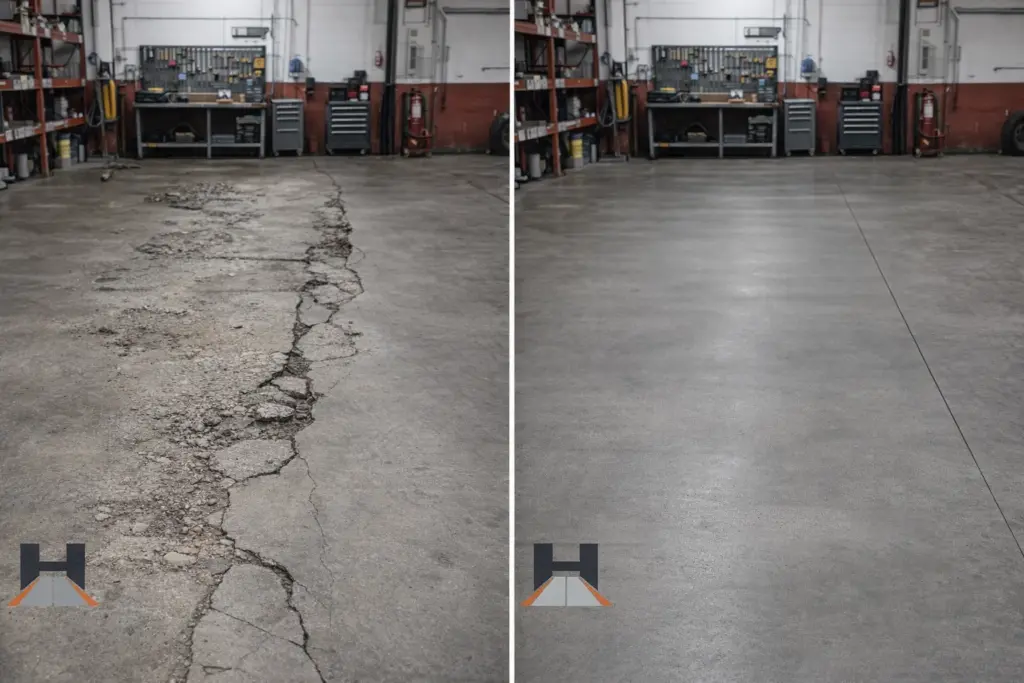
Hamilton driveway before and after a concrete repair

Slab Levelling and Sunken Panels

Where a slab has dropped but the concrete itself is still sound, levelling is the repair we look at first, because it keeps the existing slab and costs a fraction of taking it out.

Panels sink when what is under them settles, so the work is about filling the void underneath. It suits a slab that has gone down as a unit. A panel that has broken into pieces on the way down is a replacement, and we will say so.

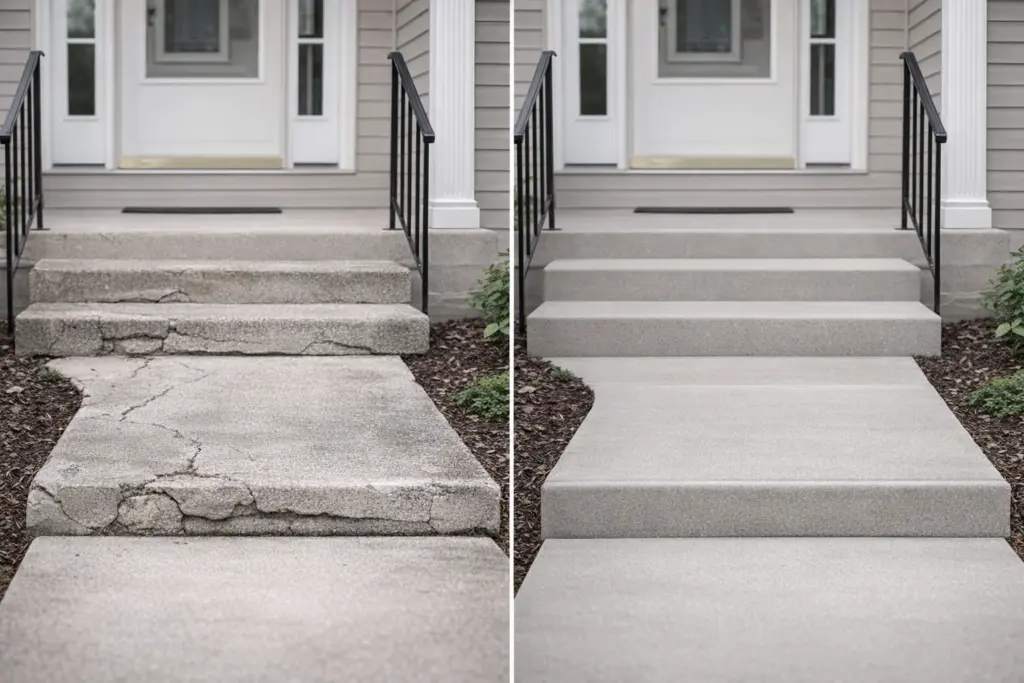
Sunken concrete slab levelled in Hamilton

Epoxy Injection and Crack Stitching

Cracks that need to transfer load rather than just be kept watertight are the ones we inject and stitch, and it is the repair that gets specified most on garage floors and commercial slabs.

Injection fills the crack through its full depth and bonds the two faces back together. Stitching adds steel across the crack to carry the load the concrete can no longer carry alone. Neither will hold if the ground underneath is still moving, so the diagnosis comes first.

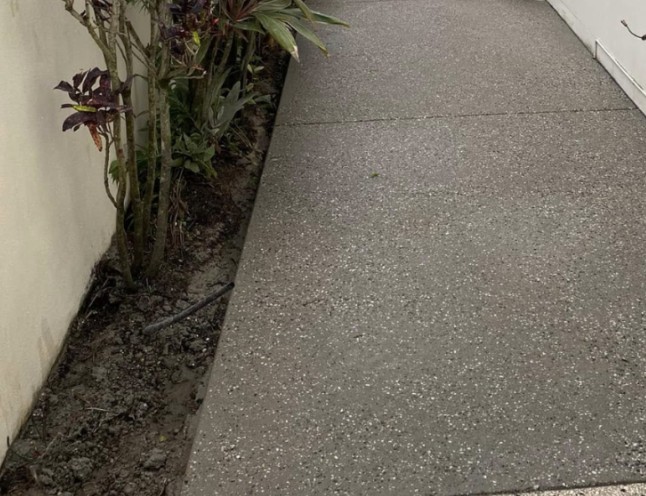
Concrete footpath poured in Hamilton

Trip Hazard Grinding and Edge Repair

Lifted edges at a joint are the repair we do most on paths and footpaths, and they are worth dealing with early because a trip hazard is a liability as well as a nuisance.

Where the step is small and the slab is sound, grinding the lifted edge back to a ramp removes the hazard in an afternoon with no concrete work at all. Where the lift is large or the panel has tipped, the panel comes out. Tree roots are the usual cause and they will do it again if they are left.

Concrete surface repaired in Hamilton

Spalling, Scaling and Surface Breakdown

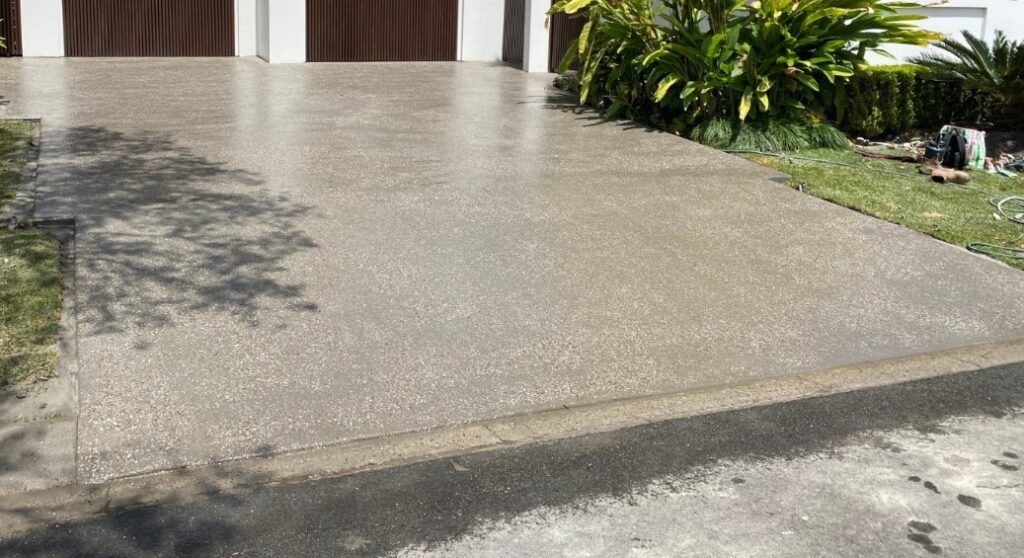
Surfaces that are flaking, dusting or breaking away at the top few millimetres come to us as spalling and scaling, and the cause is nearly always in how the surface was finished or cured.

Concrete that dried too fast, was overworked while bleeding, or never got a proper cure ends up with a weak skin over sound concrete underneath. That is a surface problem, and resurfacing is what fixes it. We check the sound concrete depth before quoting a topping over it.

Driveway replacement concrete pour in Hamilton

Panel Replacement Where a Repair Will Not Hold

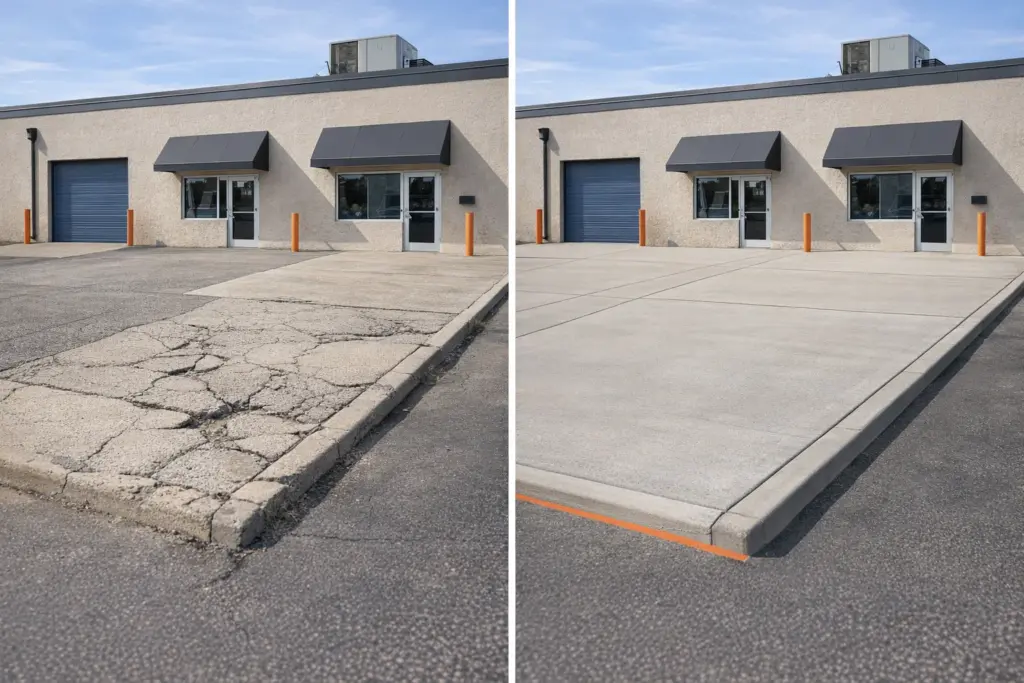
Sometimes the honest answer is that the slab has to come out, and we would rather tell you that at the quote than after you have paid for a repair that lifts in two winters.

Panels that have broken up, stepped badly at every joint, or sit over ground that is still moving are past patching. We break out, fix what is underneath, and repour to a proper base with a joint layout that will control the next twenty years.

Diagnosis First

How We Diagnose and Repair Concrete

Five steps, and the first one is the one most repairs skip.

01

Crack Survey and Cause Assessment

We walk the whole area, not just the crack you rang about. Crack width, whether the panels either side sit level, and where the water goes tell us whether this is shrinkage, settlement or overload.

02

Written Quote and Repair Method

The quote names the repair method and what it will and will not fix. Where the cause is under the slab we say so, because sealing the top of a moving crack buys a season.

03

Cut Out, Prepare and Prime

Damaged concrete is cut back to sound material with square edges, not feathered, because a thin feathered edge is the first thing to break away again. The surface is cleaned and primed to bond.

04

Fill, Inject, Level or Repour

Depending on the diagnosis we fill and seal, inject through the full depth, stitch across with steel, lift and level, or break out and repour the panel on a corrected base.

05

Joint Reseal and Cure

Joints are resealed with a flexible sealant so the repair is not bridged rigidly across a moving joint, and new concrete is damp cured for seven days.

Concrete panel cut out and repoured in Hamilton
5.0

Rated on Google

Concrete Repair Prices in Hamilton

Crack sealing in Hamilton runs $150 to $500 depending on the length and the width of the crack. Epoxy injection runs $300 to $1,500 and over, because it is priced on the depth of the crack and how much of it has to be filled. Slab levelling runs $500 to $2,500 depending on how far the panel has dropped and how much void is under it.

Where the surface is the problem and the slab underneath is sound, resurfacing runs $40 to $80 per square metre. Where the slab has gone past repair, full replacement including break-out and removal runs $120 to $180 per square metre.

These ranges are a guide as at August 2026, not a quote. We look at the area on site, work out what caused it, and the price comes back in writing with the method named.

Concrete repair workGuide range (Aug 2026)
Crack sealing$150 to $500
Epoxy injection$300 to $1,500+
Slab levelling$500 to $2,500
Resurfacing a sound slab$40 to $80 / m²
Full replacement, including break-out$120 to $180 / m²

What Moves the Price of a Concrete Repair

What actually caused it. The single biggest factor, and the one that is invisible in a photo. A shrinkage crack in a sound slab is a cheap fix. The same crack over ground that is still settling is a different job entirely.

Crack width and depth. A hairline that needs sealing against water and a wide crack that needs filling through the full slab depth are different products, different plant and different hours.

Whether load has to cross the crack. Keeping water out is one job. Getting the two sides working together again under a vehicle is another, and it means injection or stitching rather than a sealant.

Access and area. A single panel in an open driveway is straightforward. The same repair inside a garage, against a wall, or on a commercial floor that cannot stop working is not.

Void under the slab. On a levelling job the material that goes in is the cost. How much is under there is only known once it starts filling.

Break-out and disposal. Where a panel comes out, the demolition, cartage and tip fees are a real line on the job.

Matching existing concrete. New concrete never matches old exactly. Getting close costs more time than pouring it does.

The council crossing. If the repair touches the vehicle crossing at the kerb, Council approval and inspection sit in the programme even on a rebuild.

How We Work

What We Do Before We Fill Anything

Six things we do on a repair that decide whether it is still holding in five years.

We Price the Cause, Not the Crack

We quote the cause and not the symptom. Anyone can fill a crack, and a filled crack over moving ground reopens within a season. Working out whether the movement has stopped is the part of a repair that decides everything else, so it happens before a price gets written.

Stable Cracks and Moving Cracks Get Different Work

A crack that has finished moving takes a rigid repair that bonds both faces back together. A crack that is still working takes a flexible sealant that can accommodate it. Using the wrong one is why so many previous repairs fail, and telling them apart is a site call, not a photo call.

Joint Layout Is Usually the Real Fault

Most cracked slabs we see were poured without enough control joints, or with joints cut too shallow or too late. Concrete cracks where you put the joint or where it chooses. When we repour we cut joints at 3 metre centres to a quarter of the slab depth, within 24 hours in warm weather and 48 in cold.

Levelling Where the Slab Itself Is Sound

Where the slab has dropped as one piece and the concrete is still sound, lifting it back is faster, cheaper and less disruptive than replacement. We check the panel for breaks first, because a slab that has cracked on the way down cannot be lifted back as a unit.

Rebuilt Crossings Still Need Council Approval

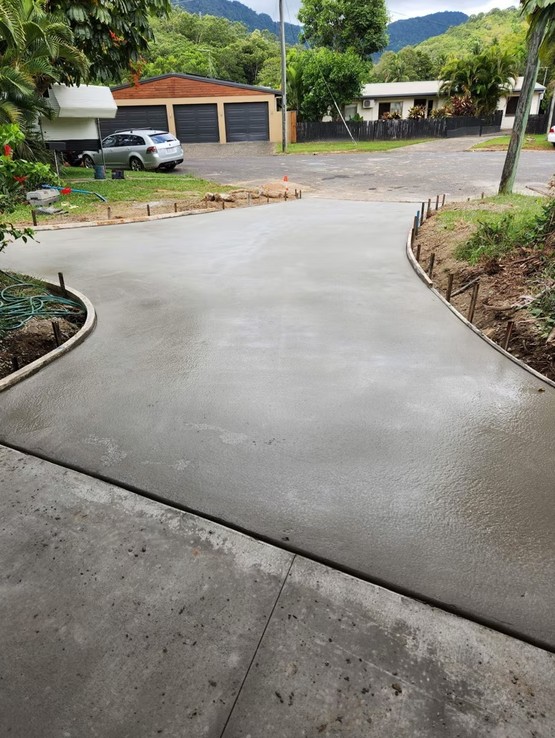
Rebuilding a vehicle crossing is not exempt from approval. Hamilton City Council requires every crossing to be approved before construction and inspected while it is open, and that covers a like for like rebuild of one already there. We allow for it up front.

We Say When a Repair Is Money Spent Twice

Some slabs are past economic repair and saying so costs us the small job in front of us. It is still the right answer. Where patching will buy two winters and a replacement will last twenty, we put both numbers in front of you and let you decide.
Concrete driveways poured in Hamilton
Cracking and Ground

Why Concrete Cracks on Hamilton Ground

Concrete cracks. That is not a defect, it is a material property, and any contractor who tells you their concrete will not crack is selling something. Concrete shrinks as it hydrates and it has to relieve that somewhere. The only question is whether it cracks where somebody decided or somewhere it chose.

That is what control joints are for. New Zealand guidance for domestic work puts them at 3 metre centres on a residential slab, cut to a quarter of the slab depth, within 24 hours in warm conditions and 48 hours in cold. A joint cut too shallow does not create a weak plane deep enough to control the crack, so the slab cracks beside it instead. A joint cut too late arrives after the concrete has already decided. Both faults are extremely common on the slabs we are called to repair, and neither is visible until it fails.

The second cause is Hamilton ground itself. Hamilton sits on the Hinuera Formation, recorded in Council geotechnical work as interbedded coarse alluvium, pumice gravels, peat and silts, and as highly variable both across a site and down through it. A slab spanning two different materials will find the join between them. Add fill, which compacts at a different rate to undisturbed ground, and you have the settlement pattern behind most of the stepped cracks we look at. Hamilton City went from 160,911 people at the 2018 Census to 174,741 in 2023, and a lot of the concrete now reaching the age where it fails went down on platforms cut and filled during that period.

The third is water. Once a crack lets water under a slab it moves fines out of the base, the void grows, and the panel drops. That is why a crack that looks cosmetic is worth sealing early. It is the cheapest point at which the problem can be stopped.

Reviews

Google Reviews From Hamilton Concrete Customers

Every review here is a Google review from a customer, pulled live from our profile.

EXCELLENT
Google star 1Google star 2Google star 3Google star 4Google star 5
Based on 10 reviews
Posted on Google Google
Amit Sharma profile picture
Amit Sharma
Google star 1Google star 2Google star 3Google star 4Google star 5Trustindex verifies that the original source of the review is Google.
My driveway was cracked all over and needed replacement as it was very old and worn off. I called Hamilton Concrete Contractors for a quote and consultation. Olly came over the next day to have a look and suggested the solution that best suited to my driveway's condition. I really liked the friendly vibes from Olly and he sounded like he genuinly cared. I got 3 more quotes from other companies but they were very transactional in my opinion. I liked Olly's approach and vibe so decidied to go ahead with him. He did an exceptional job for me and I am happy with the service.
Posted on Google Google
kritika arora profile picture
kritika arora
Google star 1Google star 2Google star 3Google star 4Google star 5Trustindex verifies that the original source of the review is Google.
We had an outstanding experience with Hamilton Concrete Contractors. The team was professional, punctual, and highly skilled. They handled our concrete project from start to finish with great precision, ensuring a smooth and durable finish. Their attention to detail and quality workmanship was excellent, and they kept the site clean and safe throughout the process. Communication was clear and consistent, and all our questions were answered promptly. We are extremely happy with the results and highly recommend Hamilton Concrete Contractors for any residential or commercial concrete work in Hamilton.
Posted on Google Google
Seyi Oluokun profile picture
Seyi Oluokun
Google star 1Google star 2Google star 3Google star 4Google star 5Trustindex verifies that the original source of the review is Google.
Tested and trusted. They have proven that they are reliable for any construction project. Highly recommended to all and sundry.
Posted on Google Google
abah boniface profile picture
abah boniface
Google star 1Google star 2Google star 3Google star 4Google star 5Trustindex verifies that the original source of the review is Google.
They are absolutely reliable, they kept to the agreement and they delivered the job smoothly
Posted on Google Google
Damilola Oscar (J Hanameel) profile picture
Damilola Oscar (J Hanameel)
Google star 1Google star 2Google star 3Google star 4Google star 5Trustindex verifies that the original source of the review is Google.
One of the best at this. I am very excited to work with them. You can trust them too, I strongly recommend!
Verified by Trustindex
Trustindex verified badge is the Universal Symbol of Trust. Only the greatest companies can get the verified badge who has a review score above 4.5, based on customer reviews over the past 12 months. Read more
Before You Fill It

Concrete Repair FAQs

The questions people ask when they are deciding between a repair and a replacement.

Crack sealing runs $150 to $500. Epoxy injection runs $300 to $1,500 and over, priced on crack depth and length. Slab levelling runs $500 to $2,500 depending on the drop and the void underneath. Resurfacing a sound slab runs $40 to $80 per square metre, and full replacement including break-out runs $120 to $180 per square metre. The cause matters more than the crack, so the number comes after we have looked at it. Guide ranges, and the quote comes in writing.

It depends on three things we check on site. Whether the crack is still moving, whether the panels either side still sit level with each other, and whether the base under the slab is intact. A stable crack in a level, sound slab is a repair. A slab that has stepped at the joints has moved underneath, and sealing the top of it leaves the cause in the ground. We give you both numbers when it is genuinely a close call.

Usually the joints. Concrete shrinks as it cures and must crack somewhere, which is what control joints are for. New Zealand guidance puts them at 3 metre centres, cut to a quarter of the slab depth, within 24 hours in warm weather and 48 in cold. Cut too shallow, too late, or too far apart and the slab cracks where it likes instead. The other common cause is ground movement, particularly where a slab spans fill and undisturbed ground.

Often, yes, and it is the cheaper answer when it works. The test is whether the panel dropped as one piece and whether the concrete itself is still sound. Levelling fills the void underneath and brings the slab back up, so the existing concrete stays. A panel that cracked into sections on the way down cannot be lifted as a unit and needs replacing. We check for breaks before recommending it.

Not exactly, and anyone promising otherwise is overselling. New concrete cures to a different shade than concrete that has been down for years and weathered. Colour, texture and aggregate all differ between batches even when the mix is specified the same. We get it as close as it can reasonably go and we tell you before the work what the join will look like, so it is not a surprise on the day.

Almost always finishing or curing. Concrete that dried out too quickly, was worked while it was still bleeding water, or never got a proper damp cure ends up with a weak skin over sound concrete beneath. That is a surface problem rather than a structural one, which is why resurfacing often fixes it. We check how deep the sound concrete starts before quoting a topping, because a topping over a weak layer takes the weak layer with it.

For the private part of the driveway, no. For the vehicle crossing where it meets the kerb, yes, and that surprises people. Hamilton City Council requires every vehicle crossing to be approved before construction and inspected by staff while the work is open, and rebuilding a crossing that is already there is not exempt from that. We allow for the approval and the inspections in the programme.

It depends on the repair. A sealed crack or a ground trip hazard is usually back in service the same day. Injection and stitching depend on the product cure. Where a panel has been repoured, the concrete is damp cured for seven days, foot traffic goes on after a day or two staying off edges and corners, and vehicles after seven days, or ten through a Hamilton winter. Full strength is 28 days.

Free Repair Quotes

Get a Free Concrete Repair Quote

Tell us the rough size of the area and the finish you are after. We come out, measure it and send the price in writing. Call 07 808 6940.

Request Your Concrete Repair Quote
