

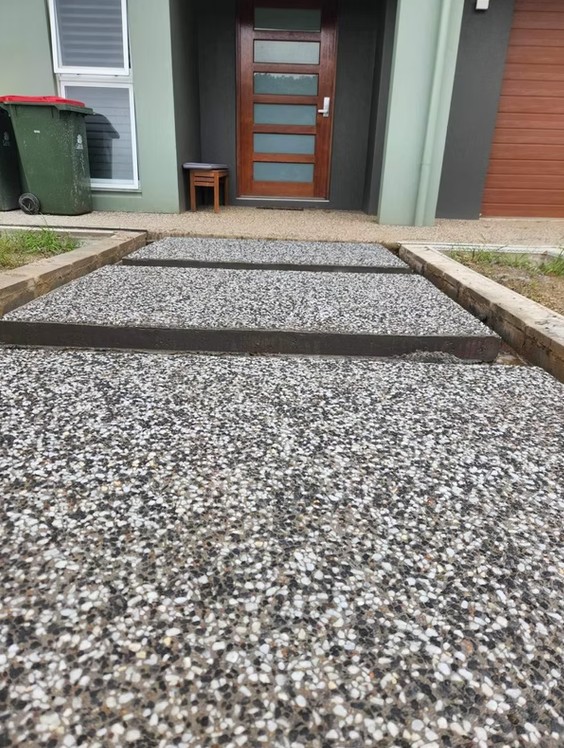
Exposed Aggregate Concrete Hamilton

At Hamilton Concrete Contractors we lay exposed aggregate across Hamilton City, on new driveways, replacements, patios, pool surrounds, paths and steps. We wash the surface back while the concrete beneath has set, and the stone in the mix becomes the finish. The colour is the concrete itself, not a coating over it. We pour it at 20 MPa, a grade above the plain concrete that goes into a standard driveway. The top layer of paste comes off in the wash, and stone holds better in a stronger mix.

We work with the pebble ranges the Waikato plants carry, from pale river stone through to darker basalt and shell blends. We seal the finished surface to lift the colour. We tell you where the stone has to stop at the kerb, because Hamilton City Council requires the vehicle crossing to match the existing footpath. We measure the area, agree the stone and put the price in writing.

Quick. Reliable. Local.
Google Reviews five star rating
Miss QQ
Verified Google Review

“I highly recommend Hamilton Concrete Contractors. They are a reliable company that does top-notch work.

Get Your Free Exposed Aggregate Quote

Tell us the rough size of the area and whether it is a driveway, a patio or a path. Add the stone you have in mind if you have already picked one, and we will price it from there.

★★★★★
5.0 on Google | 10+ years in the trade
Exposed Aggregate Work

The Exposed Aggregate Work We Take On

Six kinds of exposed aggregate job cover almost everything we quote. Driveways bring in the most enquiries and pool surrounds carry the most stone per square metre, so those two lead. All of it sits inside the concrete finishes we lay across Hamilton, poured by the same crew.

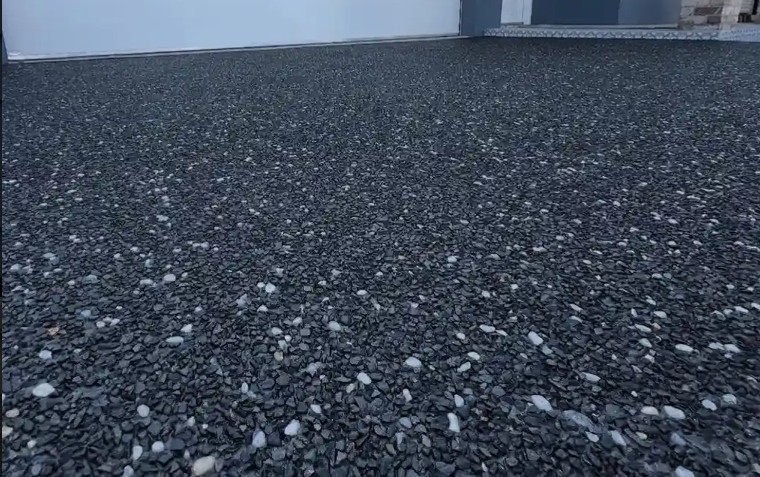
Charcoal exposed aggregate driveway

Exposed Aggregate Driveways

Most people come to us for exposed aggregate because a front driveway is the first thing anyone sees from the street, and stone hides the tyre marks and oil spotting that show up on a plain grey slab.

We pour a driveway at 100 mm as standard and 150 mm where a boat, a horse float or a truck is going to live on it. Tell us at the site visit what parks on it, because the stone sits in the top of the slab and the slab has to carry the load underneath it.

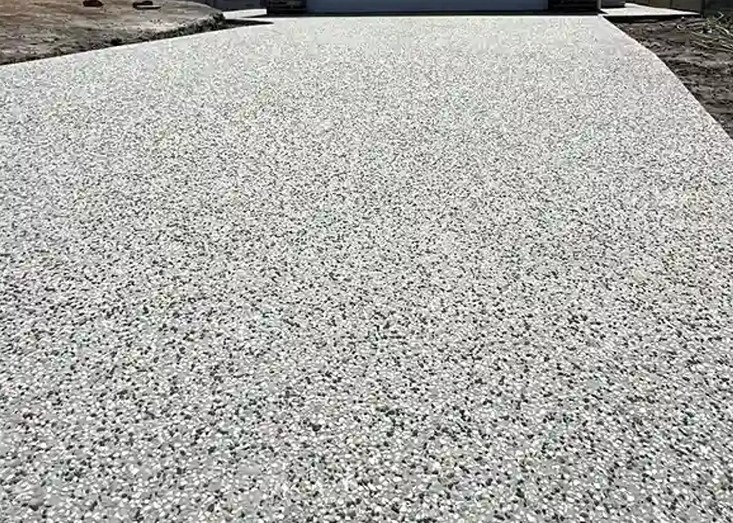
Exposed aggregate pool surround in Hamilton

Exposed Aggregate Pool Surrounds

Around a pool the texture decides the job, and we lay more stone finishes on surrounds than on any other kind of area.

Wet feet on a smooth trowelled slab slide. Stone gives a surround grip that comes out of the concrete and does not wear off the way a coating does. We fall the surround away from the water, set the joints around the coping, and keep the stone clear of the edge where the coping lands.

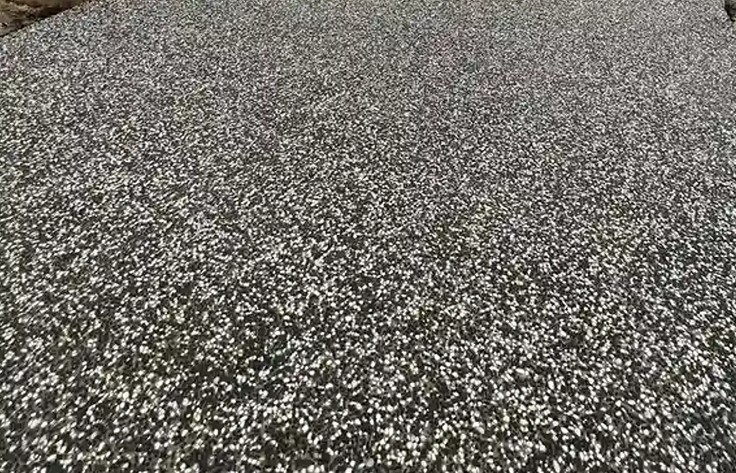
Exposed aggregate concrete surface in full sun

Exposed Aggregate Patios and Courtyards

The patios we lay in exposed aggregate sit with the garden, and the stone picks up the colour of whatever is planted around it. A patio takes the same 20 MPa mix as a driveway and the same seven day cure.

Cladding clearance is the thing to settle first. Weatherboard, fibre cement and plaster want 150 mm between the bottom of the cladding and a paved surface, so tell us the finished level you want before we set the forms.

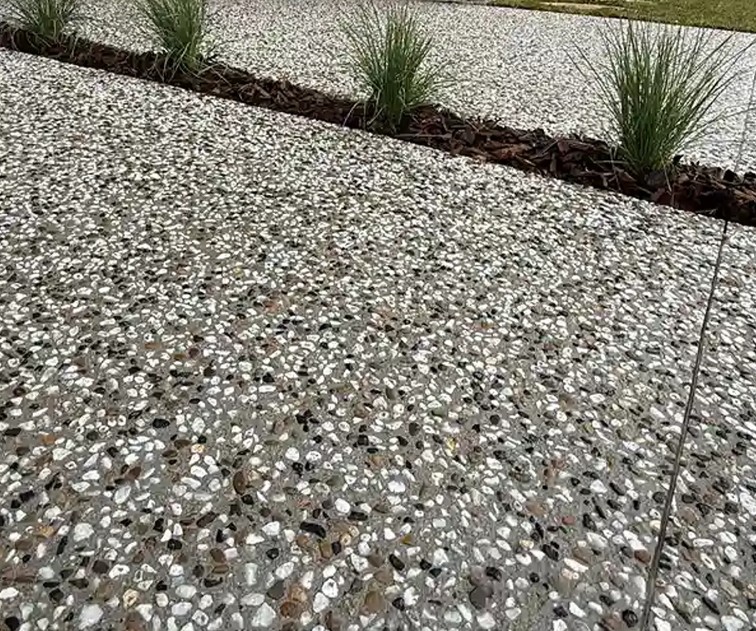
Exposed aggregate concrete edged against a bark garden strip

Exposed Aggregate Paths and Steps

Paths and steps are where we get asked for exposed aggregate on its own, without a driveway attached. A smooth path down the side of a house turns greasy through a Hamilton winter.

The Building Code requires access routes to have adequate slip resistant walking surfaces under all conditions of normal use, and the path to your front door is one. Stone answers that in the surface itself. We set the fall across a path at about 1 in 40 so the water runs off it.

Exposed aggregate driveway with a curved edge

Replacing a Plain Driveway With Exposed Aggregate

Swapping a grey driveway for exposed aggregate is a full replacement for us, because the stone is cast into the slab and cannot be laid over what is already there.

The old concrete gets broken out and carted off site before anything new goes down, and the ground underneath gets checked and recompacted once it is clear. Where the driveway meets the kerb, Hamilton City Council approves the crossing before work starts, so tell us early if the crossing is coming out too.

Exposed aggregate concrete in Hamilton

Sealing and Resealing a Stone Finish

Sealing is the job we get called back for on a washed stone surface, usually on a driveway laid by somebody else that has gone dull and picked up moss.

We acid wash the surface to lift the cement bloom and any efflorescence, water blast it off, then put the sealer onto dry concrete. A sealer is a wearing product. Its life depends on the product, the traffic over it and the sun it takes, so we tell you which one went down and what its recoat interval is.

The Pour and Wash

How We Lay and Wash an Exposed Aggregate Slab

Five steps, from picking the stone to the day the joints get cut.

01

Stone Selection and Site Measure

We measure the area and go through the pebble ranges the local plants carry. Stone is the one decision on this job that cannot be changed afterwards, and colour reads differently wet, dry and in shade.

02

Quote, Mix Design and Slab Depth

The price comes back in writing with the stone, the 20 MPa mix, the slab depth and the base under it. Nothing gets booked off that until you say go.

03

Vehicle Crossing and Where the Stone Stops

Council approves the crossing before construction and inspects it while it is open. The crossing has to match the existing footpath, so we mark on the plan where the exposed aggregate finishes.

04

Excavation, GAP20 Base and Mesh on Chairs

We dig to depth, compact 100 mm of GAP20 in layers, and lift 665 mesh on chairs so it finishes 30 to 40 mm below the surface. The top of the slab comes off in the wash, so the steel has to sit low.

05

Retarder, Wash Off and Joint Cutting

We place, screed and spray the retarder, then wash the paste back once the slab beneath has hardened. Joints get cut at 3 metre centres to a quarter of the slab depth, and the surface is damp cured for seven days.

Exposed aggregate concrete being placed in Hamilton
5.0

Rated on Google

Exposed Aggregate Prices in Hamilton

Exposed aggregate runs $130 to $200 and over per square metre installed on a Hamilton driveway. Where a job lands in that band comes down to the stone, the shape of the area and the ground under it.

A patio, a pool surround or a path in the same finish runs $140 to $210 per square metre. Formwork takes a bigger share of the day on a small shaped area than on a straight run of driveway. Swapping an existing plain driveway for stone runs $150 to $230 per square metre, with the break-out and cartage of the old slab inside that number.

These are guide ranges and not a quote. We measure the area on site, agree the stone with you, and the price comes back in writing.

Exposed aggregate workGuide range
New exposed aggregate driveway$130 to $200+ / m²
Exposed aggregate patio, pool surround or path$140 to $210 / m²
Existing driveway replaced in exposed aggregate, including break-out$150 to $230 / m²
Plain or broom finish on the same slab$100 to $150 / m²

What Moves the Price of an Exposed Aggregate Job

Stone choice. Local river mixes are the cheapest stone in the Waikato because the plants already carry them. Black basalt, white quartz and shell blends are ordered in, and what the aggregate costs carries straight through to the square metre rate.

Depth of exposure. A light wash that just opens the surface is a shorter day than a deep exposure where the stone stands proud of the paste.

Area and shape. Formwork sets the labour on this finish. A long straight run is quicker per square metre than the same area broken into curves, steps and narrow returns.

What parks on it. A slab carrying two cars is built lighter than one taking a boat, a horse float or a delivery truck. Thickness, mesh gauge and dig depth all move together when the load goes up.

Ground. Hamilton ground changes over short distances, from pumice gravel through silt to peat. Ground that moves takes heavier steel or a designed layout, and that gets settled at the site visit.

Excavation and cartage. How deep we dig, and how many truckloads leave the section. Tip fees are a real line on a job.

Break-out. An existing slab has to be demolished, loaded and disposed of before a new base can be built.

Access to the pour. A truck that reaches the work is the cheapest outcome. Tight access means a pump or barrowing, and both add hours.

Falls and drainage. Water has to leave the surface. Getting the falls right can mean extra excavation, a channel drain or a soak pit.

Sealing. Sealer is optional on exposed aggregate and it is priced with the job at the site visit.

The council crossing. Where the work touches the kerb, approval and inspection sit in the programme.

The Difference

What We Do Differently on an Exposed Aggregate Pour

A washed stone finish goes wrong in ways plain concrete does not. These six are where those jobs get won.

20 MPa Because the Top Surface Comes Off

Plain concrete for driveways and paths is often specified at a 17.5 MPa design strength. Exposed aggregate is recommended at 20 MPa, because washing the paste off the top leaves less holding the stone in, and a stronger mix loses fewer stones out of the surface.

Retarder Timed to the Weather on the Day

The retarder we spray stops the paste setting on top while the slab underneath goes hard. How long it stays on depends on the temperature, the wind and the mix, so somebody stays on site and watches the surface until it is ready to wash.

Colour Varies Between Loads and That Is Normal

Stone is quarried, so some colour variation across a pour is expected on any washed finish. We order the whole area off one batch where the volume allows it, and we tell you what to expect before the concrete is booked.

Joints Cut at 3 Metre Centres Through the Stone

Control joints go in at 3 metre centres, cut to a quarter of the slab depth, inside 24 hours in warm weather and 48 in cold. Cutting through a washed surface is slower and dustier than cutting plain concrete, and a slab with no joints picks its own crack line.

Iron Pyrites and Rust Spotting in Stone

Some aggregates carry iron pyrites, which can stain the surface as they weather. That is a property of the stone and not a fault in the pour, and it is one reason we go through the ranges with you before the concrete is ordered.

We Say When Exposed Aggregate Is the Wrong Finish

Stone is harder to sweep and harder to clean than a broom finish, and on a shaded path it holds moss. Where a broom finish or a coloured slab would serve the area better, we say so before you have paid for stone.
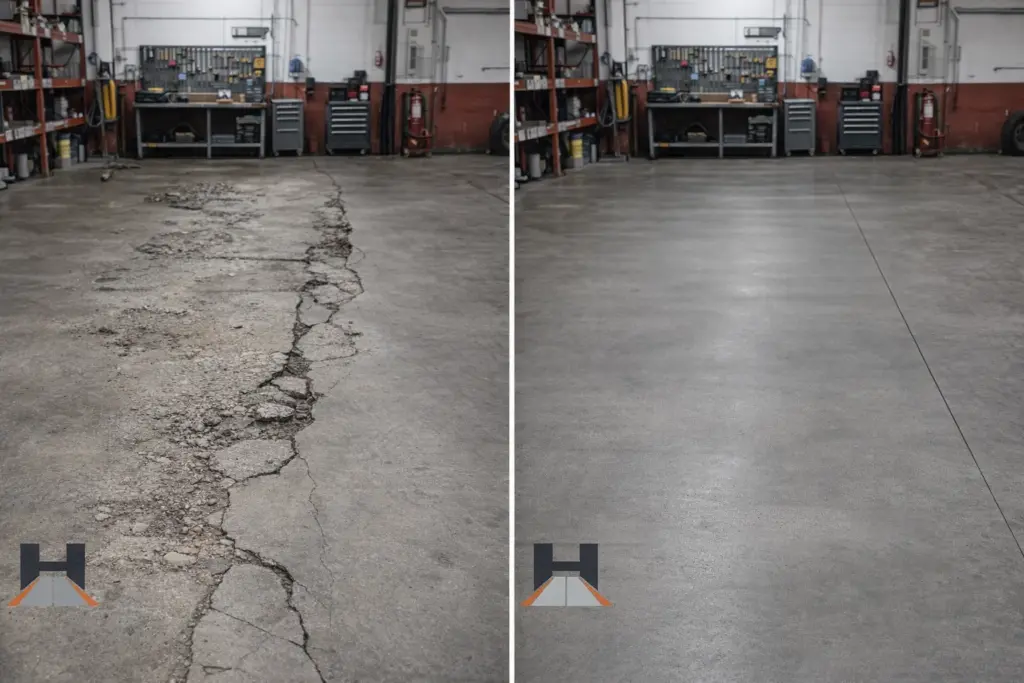
Hamilton driveway before and after a concrete repair
Council and Kerb

Where Exposed Aggregate Stops at the Hamilton City Council Crossing

An exposed aggregate driveway stops being your decision at the property boundary. Hamilton City Council requires every vehicle crossing to be approved before construction and inspected by staff while the work is open. That covers a new build, a second crossing on an existing site, and a rebuild of a crossing that is already there. A like for like rebuild is not exempt.

The surface is the part that catches people out. The Council requirement is that the crossing material matches the existing footpath, and that the existing footpath is removed and reconstructed in the same material. So the stone you have picked runs up to the boundary. The crossing outside it gets built to the Regional Infrastructure Technical Specification, section 3 Transportation, clause 3.3.19, in whatever the footpath already is. Three inspections sit around that work, and we draw the line on the plan at quoting stage so the change of finish is not a surprise on pour day.

Behind the boundary the ground decides the rest. Council geotechnical work describes the Hinuera Formation under the city as interbedded coarse alluvium, pumice gravels, peat and silts, and as highly variable both laterally and vertically. In practice the material under one end of a driveway can differ from the material under the other, and a slab poured across the join will find it.

That matters more here than on any other finish. A washed stone slab is the most expensive surface on a Hamilton section to break out and pour again, so the base under it gets checked before we dig.

Reviews

Google Reviews From Hamilton Concrete Customers

These are Google reviews left by customers and pulled live from our profile, across every kind of concrete we lay.

EXCELLENT
Google star 1Google star 2Google star 3Google star 4Google star 5
Based on 10 reviews
Posted on Google Google
Amit Sharma profile picture
Amit Sharma
Google star 1Google star 2Google star 3Google star 4Google star 5Trustindex verifies that the original source of the review is Google.
My driveway was cracked all over and needed replacement as it was very old and worn off. I called Hamilton Concrete Contractors for a quote and consultation. Olly came over the next day to have a look and suggested the solution that best suited to my driveway's condition. I really liked the friendly vibes from Olly and he sounded like he genuinly cared. I got 3 more quotes from other companies but they were very transactional in my opinion. I liked Olly's approach and vibe so decidied to go ahead with him. He did an exceptional job for me and I am happy with the service.
Posted on Google Google
kritika arora profile picture
kritika arora
Google star 1Google star 2Google star 3Google star 4Google star 5Trustindex verifies that the original source of the review is Google.
We had an outstanding experience with Hamilton Concrete Contractors. The team was professional, punctual, and highly skilled. They handled our concrete project from start to finish with great precision, ensuring a smooth and durable finish. Their attention to detail and quality workmanship was excellent, and they kept the site clean and safe throughout the process. Communication was clear and consistent, and all our questions were answered promptly. We are extremely happy with the results and highly recommend Hamilton Concrete Contractors for any residential or commercial concrete work in Hamilton.
Posted on Google Google
Seyi Oluokun profile picture
Seyi Oluokun
Google star 1Google star 2Google star 3Google star 4Google star 5Trustindex verifies that the original source of the review is Google.
Tested and trusted. They have proven that they are reliable for any construction project. Highly recommended to all and sundry.
Posted on Google Google
abah boniface profile picture
abah boniface
Google star 1Google star 2Google star 3Google star 4Google star 5Trustindex verifies that the original source of the review is Google.
They are absolutely reliable, they kept to the agreement and they delivered the job smoothly
Posted on Google Google
Damilola Oscar (J Hanameel) profile picture
Damilola Oscar (J Hanameel)
Google star 1Google star 2Google star 3Google star 4Google star 5Trustindex verifies that the original source of the review is Google.
One of the best at this. I am very excited to work with them. You can trust them too, I strongly recommend!
Verified by Trustindex
Trustindex verified badge is the Universal Symbol of Trust. Only the greatest companies can get the verified badge who has a review score above 4.5, based on customer reviews over the past 12 months. Read more
Before You Order Stone

Exposed Aggregate Concrete FAQs

The questions people ask before they commit to a stone finish, answered here.

$130 to $200 and over per square metre installed on a driveway, and $140 to $210 on a patio, pool surround or path. The stone is the biggest single variable. Local river mixes sit at the bottom of the band. Imported basalt, quartz and shell blends sit at the top. Swapping an existing plain driveway for stone runs $150 to $230 per square metre with the break-out included. Every figure here is a guide. We measure the area on site and the price comes back in writing.

Council approves and inspects the vehicle crossing, and we build it to their specification. Every vehicle crossing has to be approved before construction and inspected by staff while it is open, and rebuilding a crossing that already exists is not exempt from that. The crossing itself must match the existing footpath, so the exposed aggregate finishes at the boundary. We allow for the approval and the three inspections in the programme, and we show you on the plan where the stone stops.

100 mm minimum, at a 20 MPa design strength. Plain concrete for a driveway or a path is often specified at 17.5 MPa. Exposed aggregate is recommended a grade higher because removing the top surface increases the risk of losing stone out of it. We go to 150 mm on soft or clay ground and where heavier vehicles park, over 100 mm of compacted GAP20, with 665 or 668 mesh lifted on chairs to finish 30 to 40 mm below the surface. Anything carrying trucks gets designed to the load.

Foot traffic after a day or two, carefully, and stay off the edges and corners. Cars after seven days, and ten days through a Hamilton winter. The slab is damp cured for seven days from the pour. An exposed aggregate slab is measured against the compressive strength its mix was specified to reach at 28 days, and strength development continues after that. Heavy vehicles wait the month.

Sealing is optional. It lifts the colour of the stone and makes the surface easier to clean, and it is a wearing product that has to be renewed. There is no single national reseal interval. The life of a sealer depends on the product, the traffic over it and the sun it takes. We tell you which sealer went down and what recoat interval the manufacturer sets for it. An unsealed driveway is not a failed one.

Stone is quarried rather than manufactured, so some natural variation is expected on any washed finish. Colour differs between loads, between quarry batches, and between wet and dry. Small crater-like marks in the surface are entrapped air, which makes up 4 to 6 per cent of the volume of a concrete mix. A white powdery film in the first few weeks is efflorescence, salts carried up by moisture. It brushes off, or comes away with a dilute acid wash.

It has an open texture, because the stone stands slightly proud of the paste once the surface is washed back. That is why it gets specified around pools and on sloping paths. The Building Code requires access routes to have adequate slip resistant walking surfaces under all conditions of normal use, and the path to a front door is an access route. D1/AS1 sets a coefficient of friction of at least 0.4 for level access routes used by the public.1. A private path is not held to that figure. The grip on stone comes out of the concrete, not off a coating that wears.

No. The stone is cast into the slab, so there is nothing to expose in an overlay. Where an existing driveway is sound, resurfacing is the option we would look at. Where it has cracked past repair, the slab comes out and a new exposed aggregate driveway goes in over a fresh base. We tell you which of those your driveway is at the site visit.

Free Exposed Aggregate Quotes

Get a Free Exposed Aggregate Quote

Tell us the rough size of the area and the finish you are after. We come out, measure it and send the price in writing. Call 07 808 6940.

Request Your Exposed Aggregate Quote
