

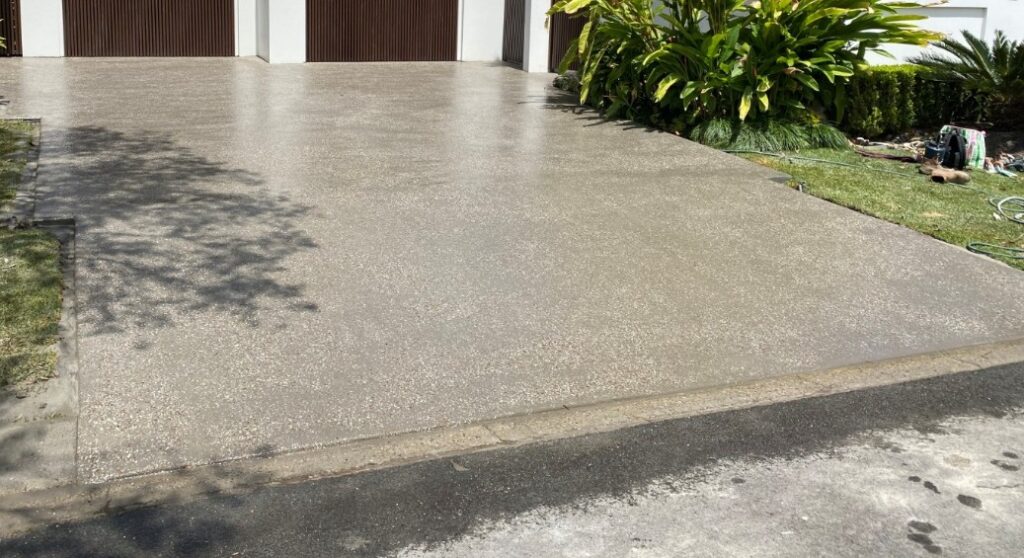
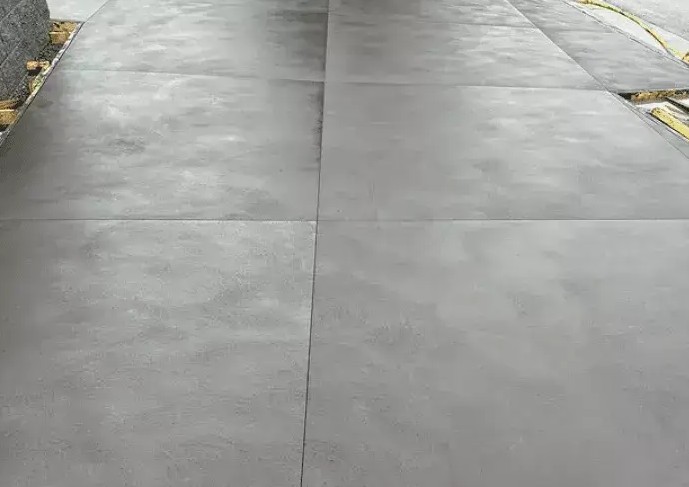
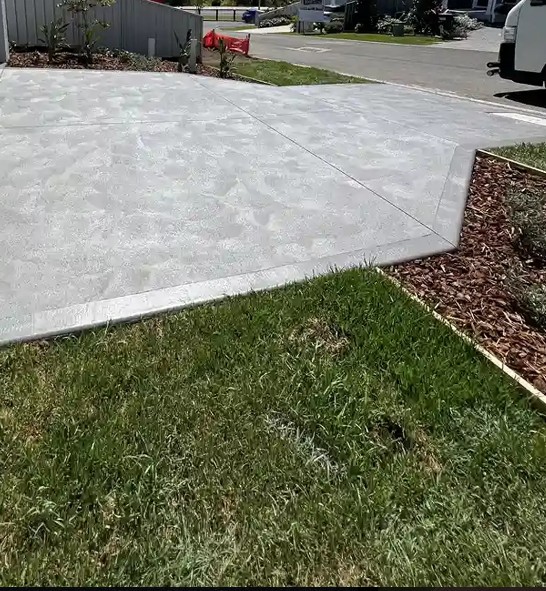
Why Homeowners Pick Us for a Concrete Driveway
Six things that decide whether a driveway is still flat in ten years. Every one of them happens before the finish goes on.
Falls Set Before the First Dig
Water off a driveway has to go somewhere, and on a flat Hamilton section that gets decided before anything is excavated. We set the fall away from the garage door and the house wall, and where a section will not drain on its own we put in a channel drain or a soak pit.
Basecourse Compacted in Layers
A driveway fails from underneath. We compact the basecourse in layers, because one thick lift looks identical on the day and settles through the first winter. The New Zealand roading specification caps a single layer at 200 mm for that exact reason.
Mesh Sits Inside the Slab
Mesh laid flat on the base does nothing at all. We lift ours on chairs so the 665 sits 30 to 40 mm down, inside the concrete where it can hold a crack closed. It is the easiest part of a driveway to get wrong and it cannot be fixed once the pour is done.
Crossings Built to the Council Specification
Hamilton City Council requires every vehicle crossing to be approved before construction and inspected throughout, and the crossing itself is built to the Regional Infrastructure Technical Specification. We schedule the inspections around the pour date so the concrete order holds.
One Crew From Break-Out to Final Cut
The people who break out the old slab are the people who cut the joints in the new one. Nothing gets handed to a second crew halfway through, so nobody has to guess what the ground was like under the old driveway.
The Slab Matches What Parks On It
A driveway carrying two cars is a different build to one taking a boat trailer or a horse float. We build to the load you tell us about, so mention anything heavy at the site visit, including the things that only turn up at Christmas.